
Short, dated, unsentimental entries on the mentor economy — turning decades of real expertise into an AI-leveraged one-person business. No hype. Just what's being attempted, and what it's teaching.

You gave them the right advice. They took notes. Nothing happened. Here is what is actually going wrong, and the delivery changes that fix it.

The engagements that damage a solo practice are rarely the ones that go wrong loudly. They are the ones that stay comfortable for a year while the practice quietly stops growing.

Most independent experts sell the engagement well and design it badly. The design is what decides whether the client renews — and whether you still want them to.

Written by someone with a genuinely rare vantage point: I wrote the book on the mentor economy and I build an AI mentor product. Here's the honest comparison, not the reassuring one.

You are past capacity. The trade press says agents can replace a whole staff. Your instinct says hire someone. Only one of those three statements is a decision, and it is not the one you think.

You have the skill and no proof of it yet. Here is the pricing move that gets you paid without pretending you have a history you don't have.
You did excellent work for people who like you. Your pipeline is still empty. That is not a relationship problem, and the data on why is unusually clear.
Nobody renegotiated your rate. The work simply grew, one reasonable favor at a time, until the number you agreed to stopped describing what you actually did.
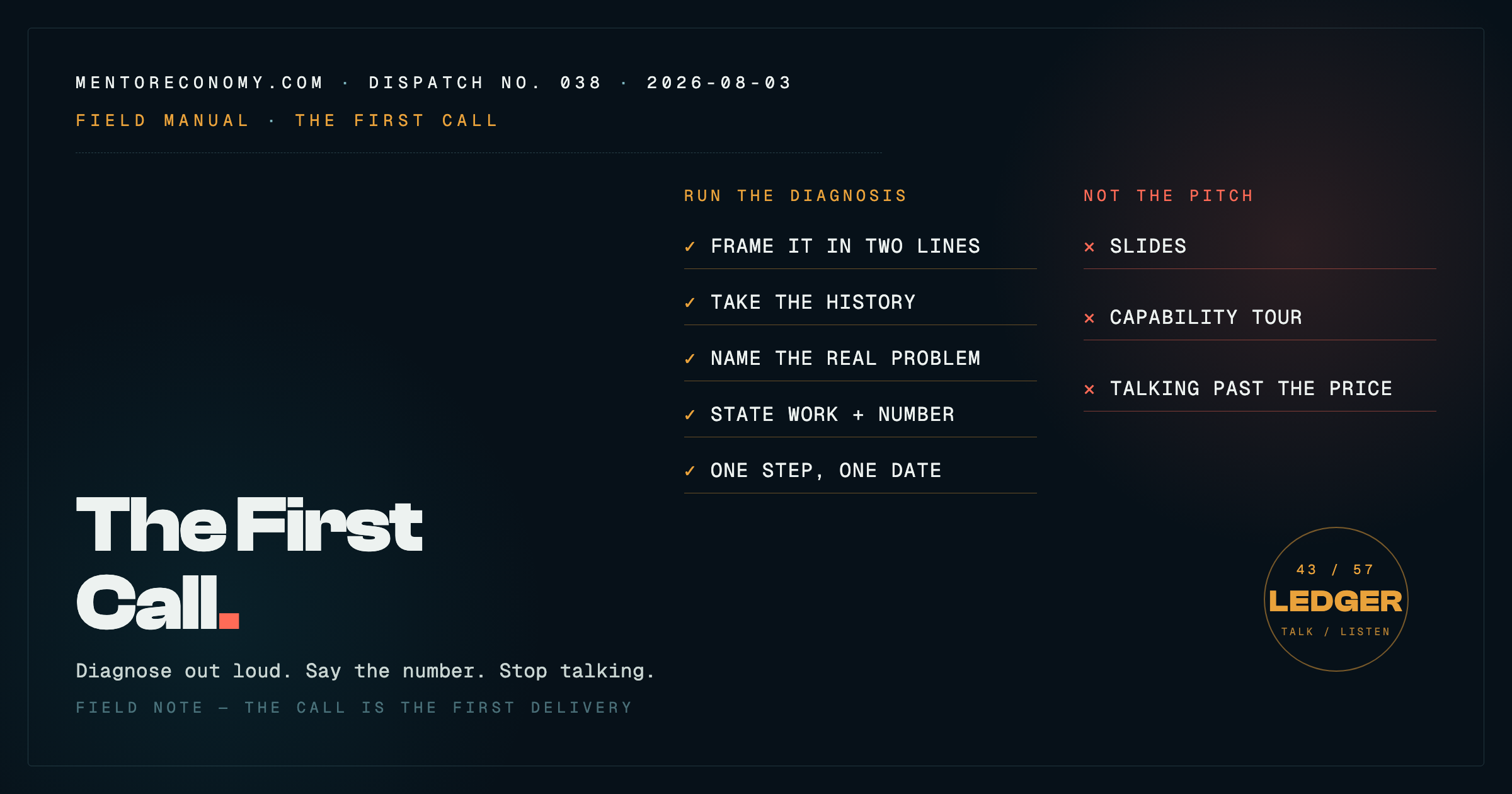
You have run this conversation a thousand times inside a company. The only unfamiliar part is the sentence at the end where you say what it costs.
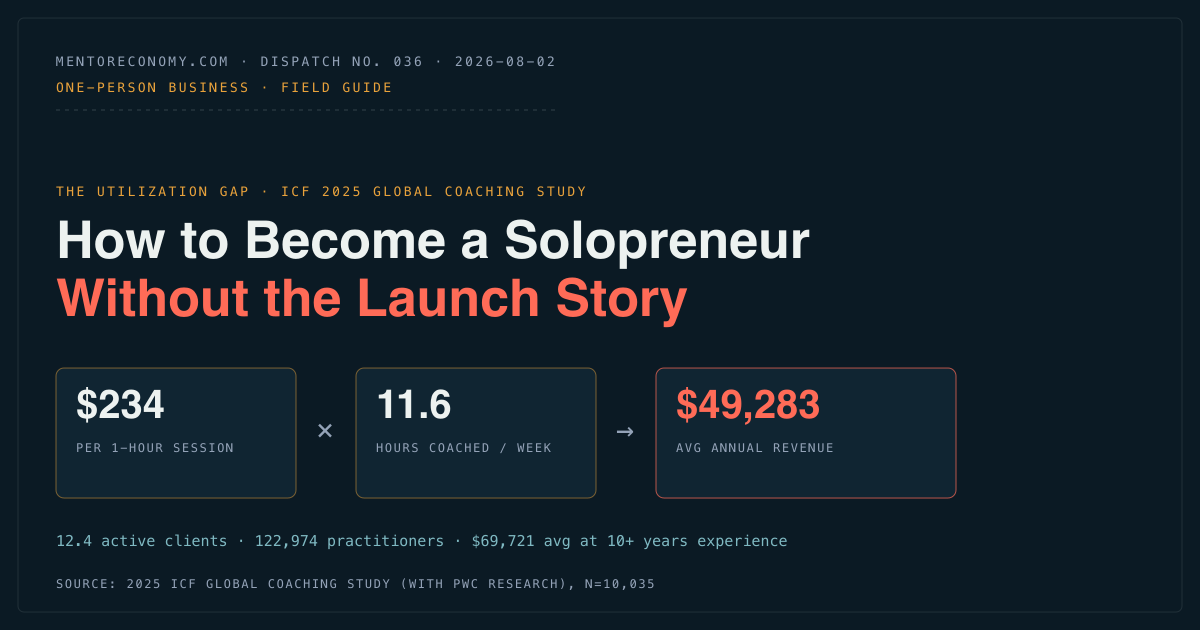
Becoming a solopreneur takes about an afternoon administratively and several years practically. Here is the honest sequence — with the earnings distribution and the experience curve attached, so you can plan against evidence instead of against a launch story.
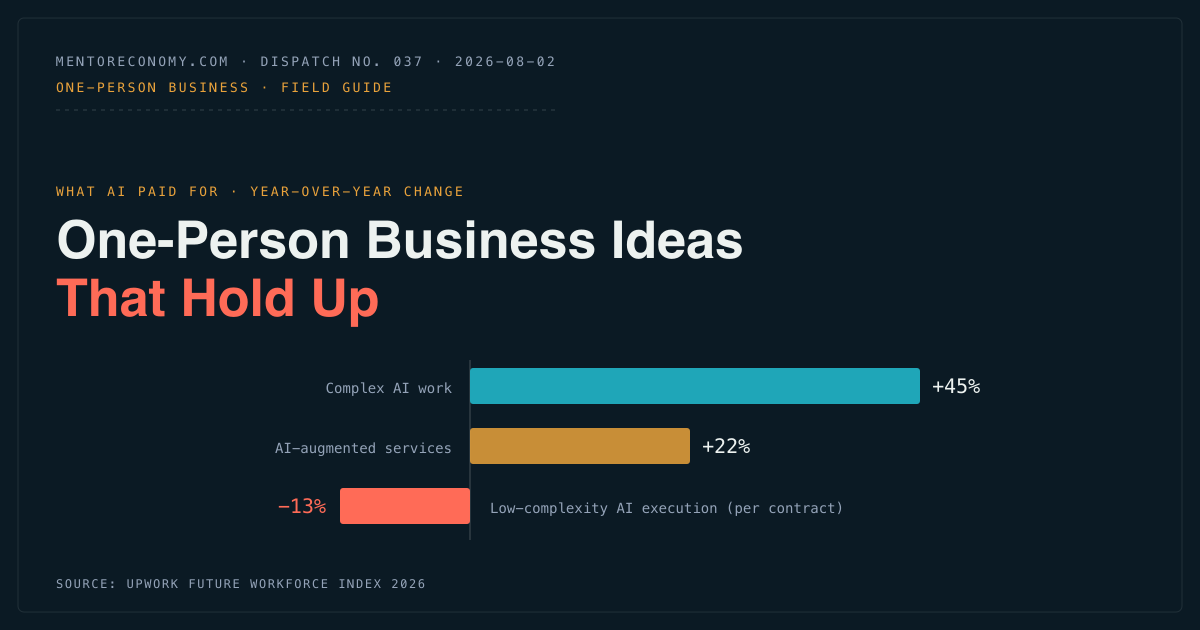
Most one-person business idea lists are trend guesses in a numbered format. This one starts from the datasets that record what these businesses actually earn, then works backwards to the four tests an idea has to survive.
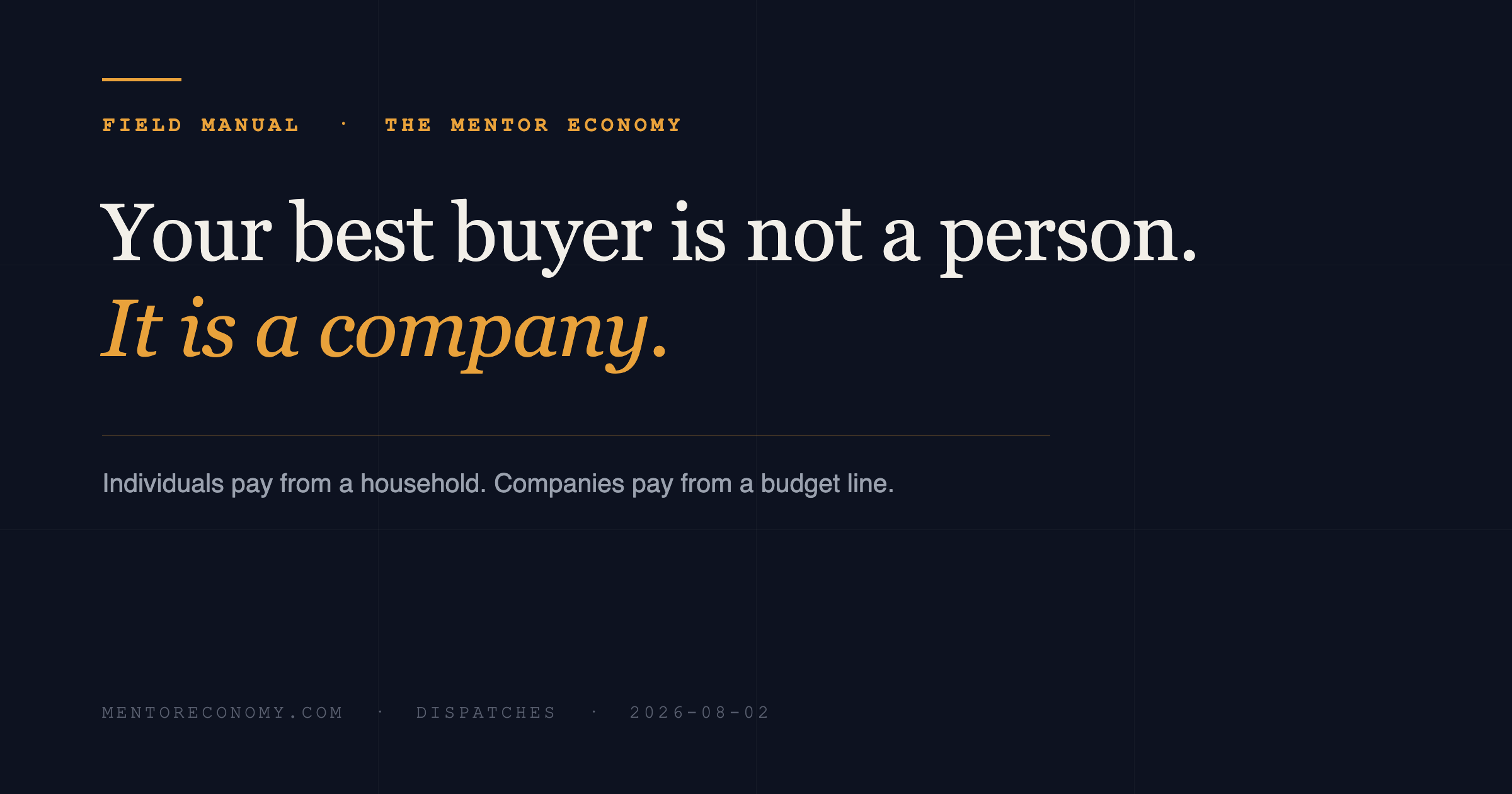
There is a layer of the economy that needs senior judgment, has real money to spend on it, and is structurally unable to buy it from anyone who currently sells it.
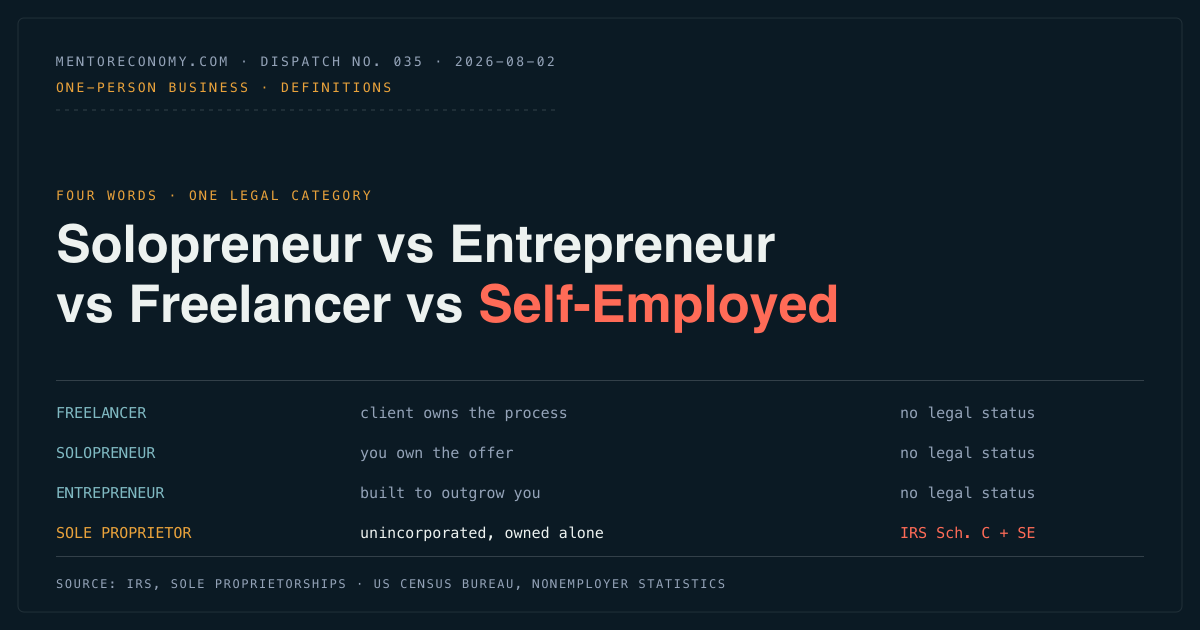
Most comparisons of these words are vibes. This one separates the two questions people are actually asking — what am I legally, and what business model am I running — because only one of them is answered by the tax code, and only the other one changes your income.
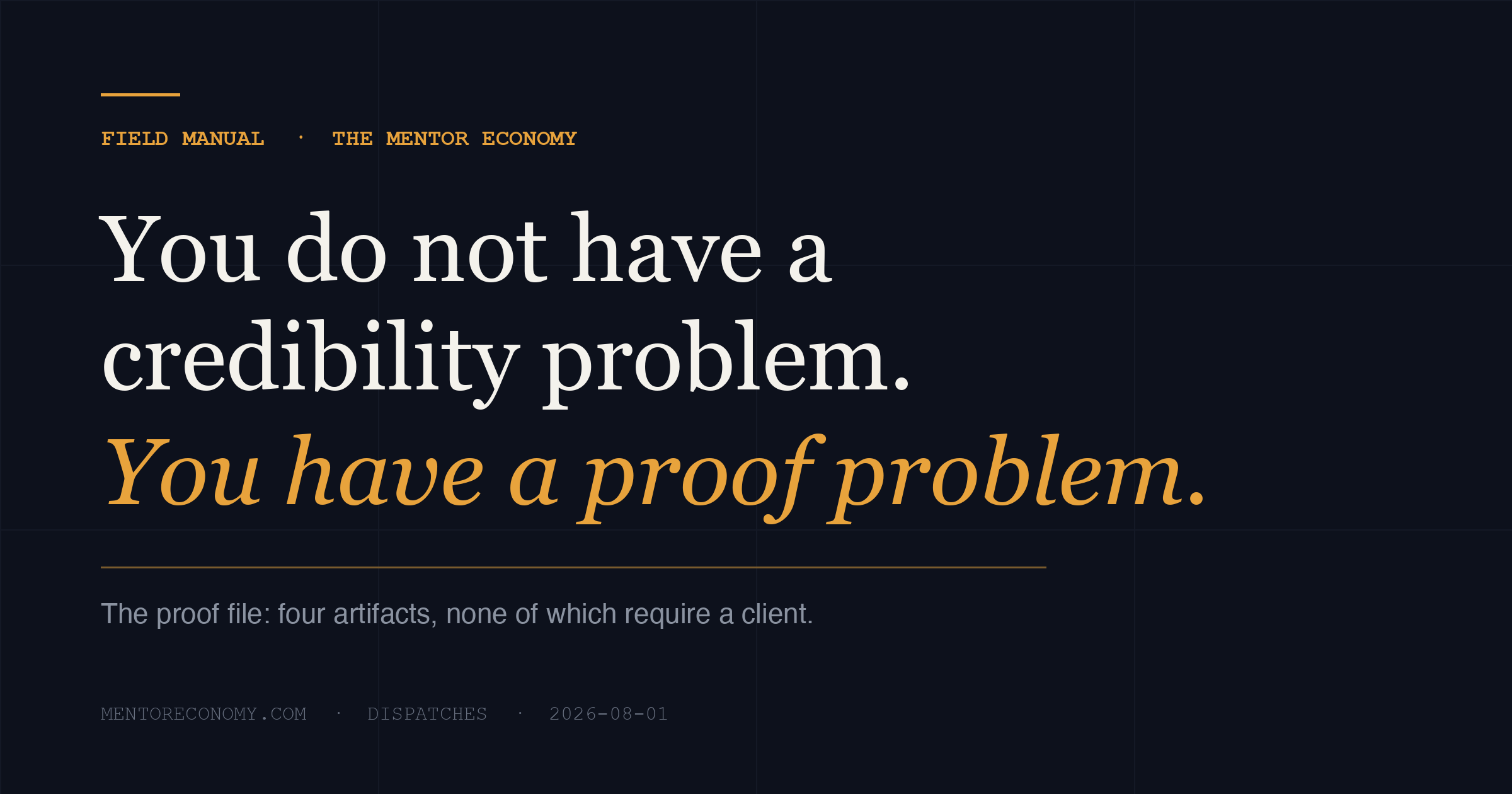
You did not become less credible the day you left. You became unverifiable — and those are different problems with different fixes.
Nobody in a one-person business loses a client in a single dramatic moment. They lose them across four quiet weeks in which nothing at all happens.
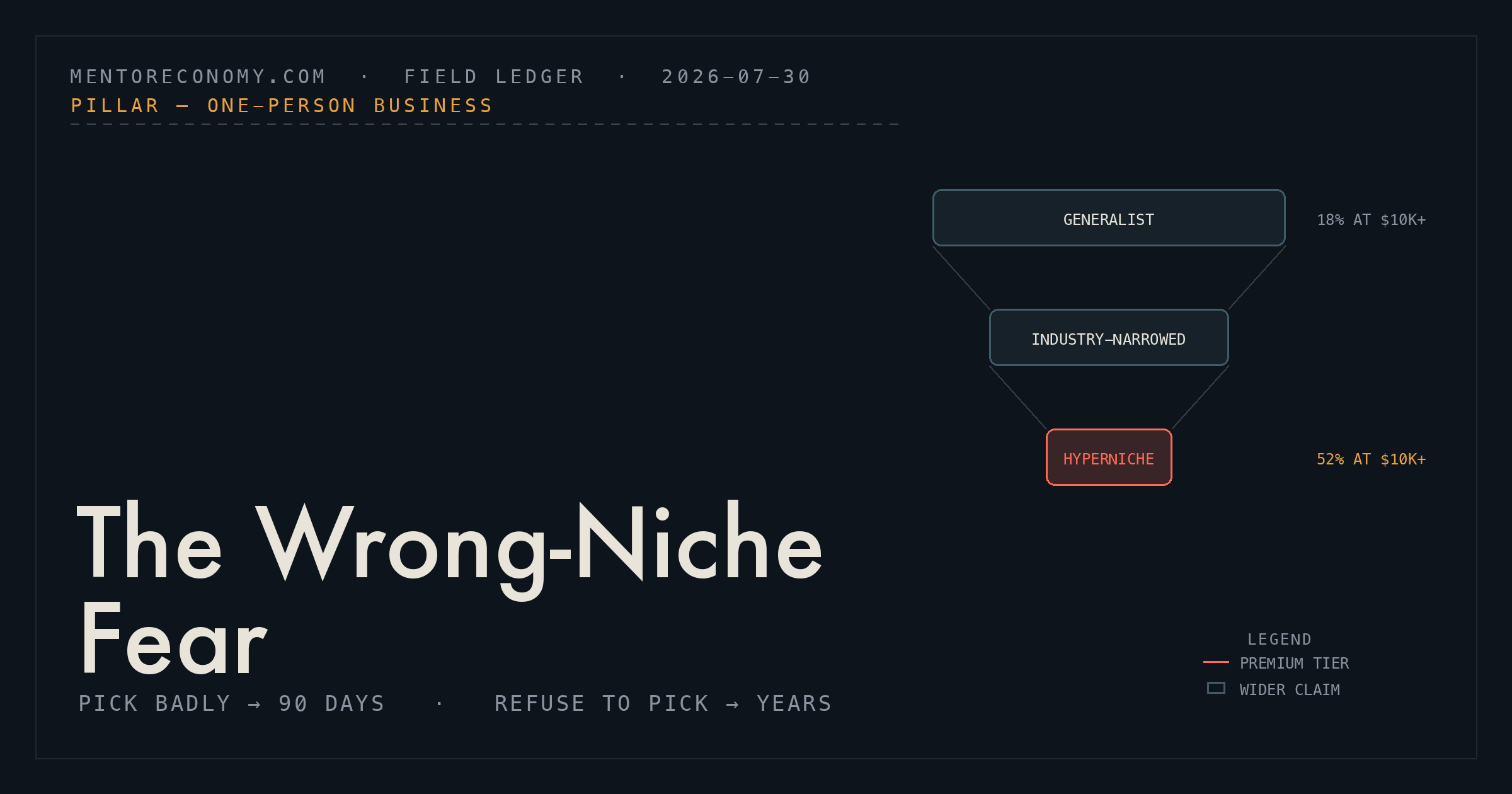
Almost no capped expert I meet is stuck because they picked the wrong niche. They are stuck because they have not picked one at all — and they are calling that caution.
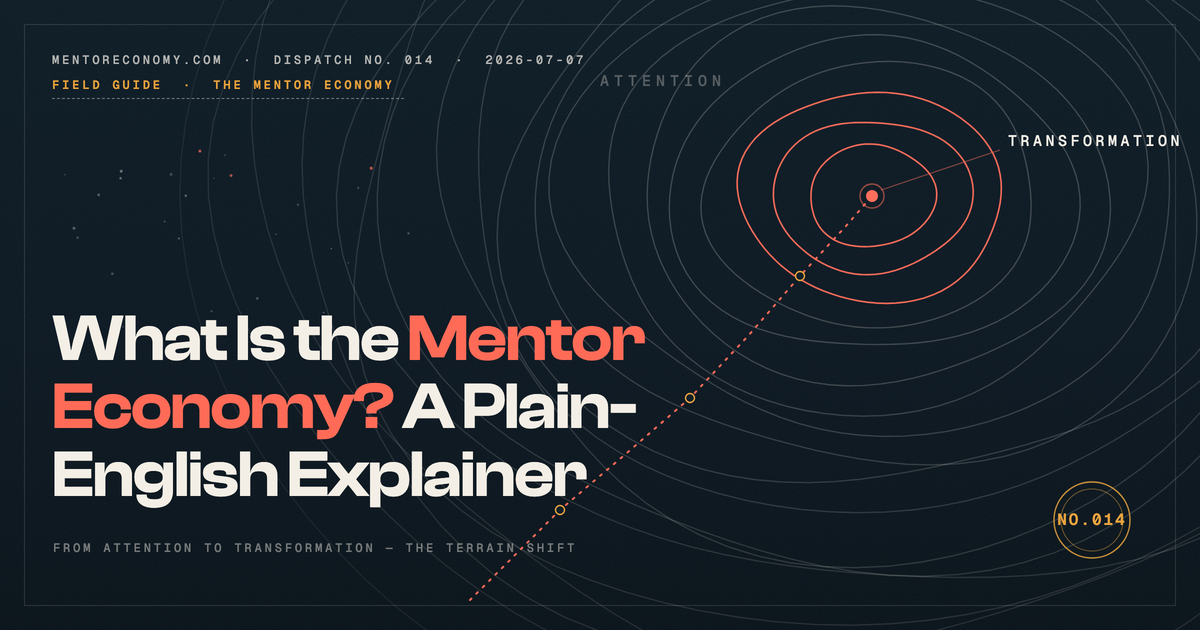
Not the creator economy. Not the gig economy. A third thing — and the 2025 data on trust, independent work, and AI adoption explains exactly why it's forming now.
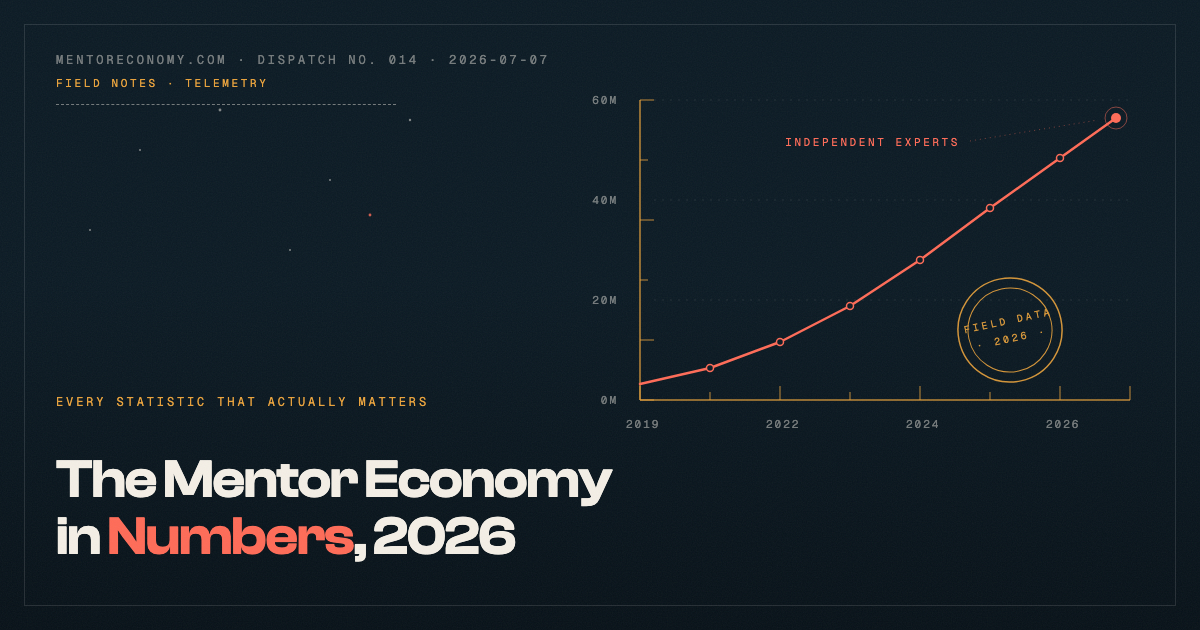
Every number below has a named primary source and a year. Where the data doesn't exist, I say so. What the numbers show: expertise-driven independent work is compounding while attention-driven creator work is saturating.
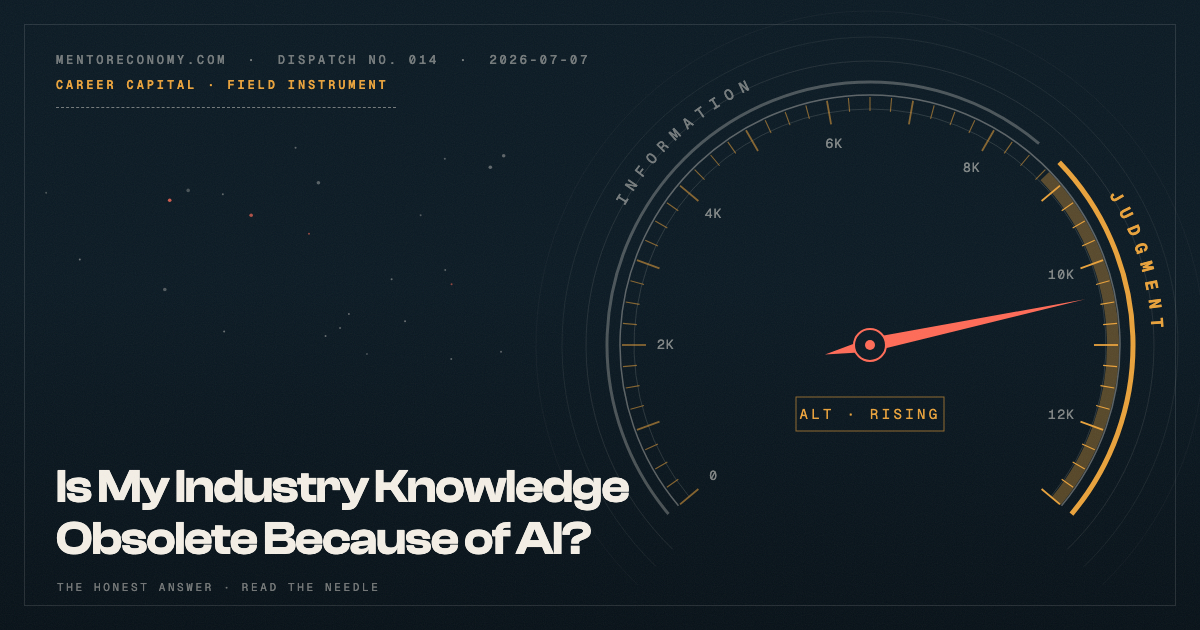
Some of what you know is being commoditized right now. The most valuable part is not — and the wage data says it's appreciating. Here's the evidence, including the parts that should worry you.
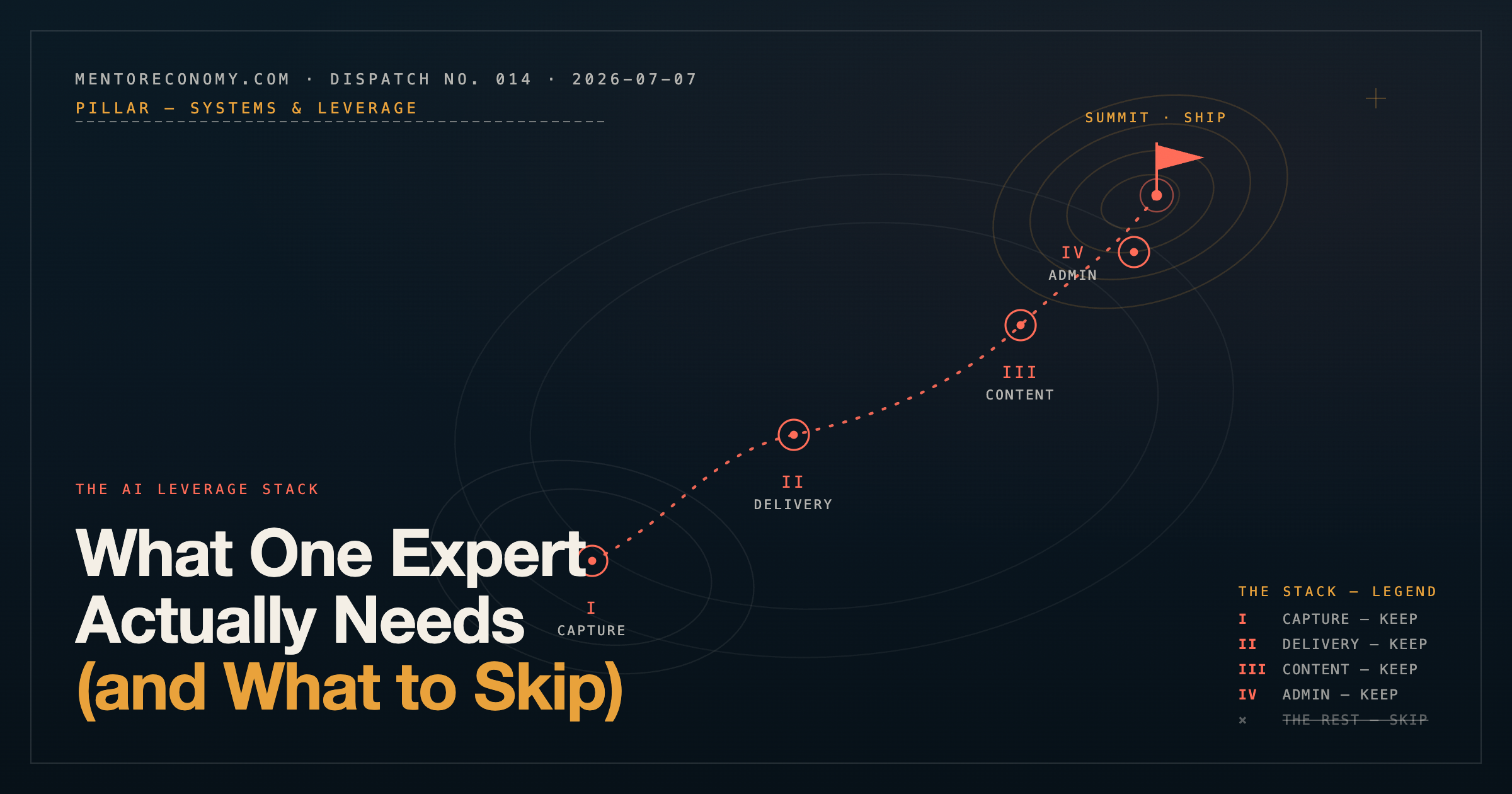
Four layers. A handful of tools. Everything else in the 'AI tools for solopreneurs' listicles is inventory you'll pay for and never deploy — because the stack is only as good as the codified knowledge feeding it.
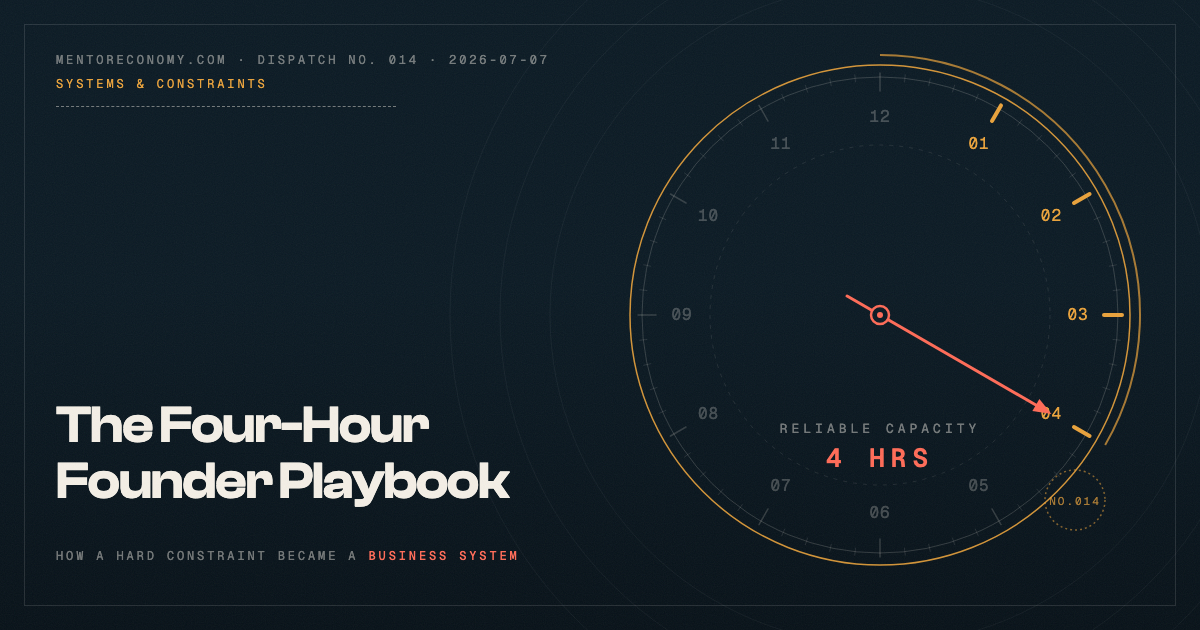
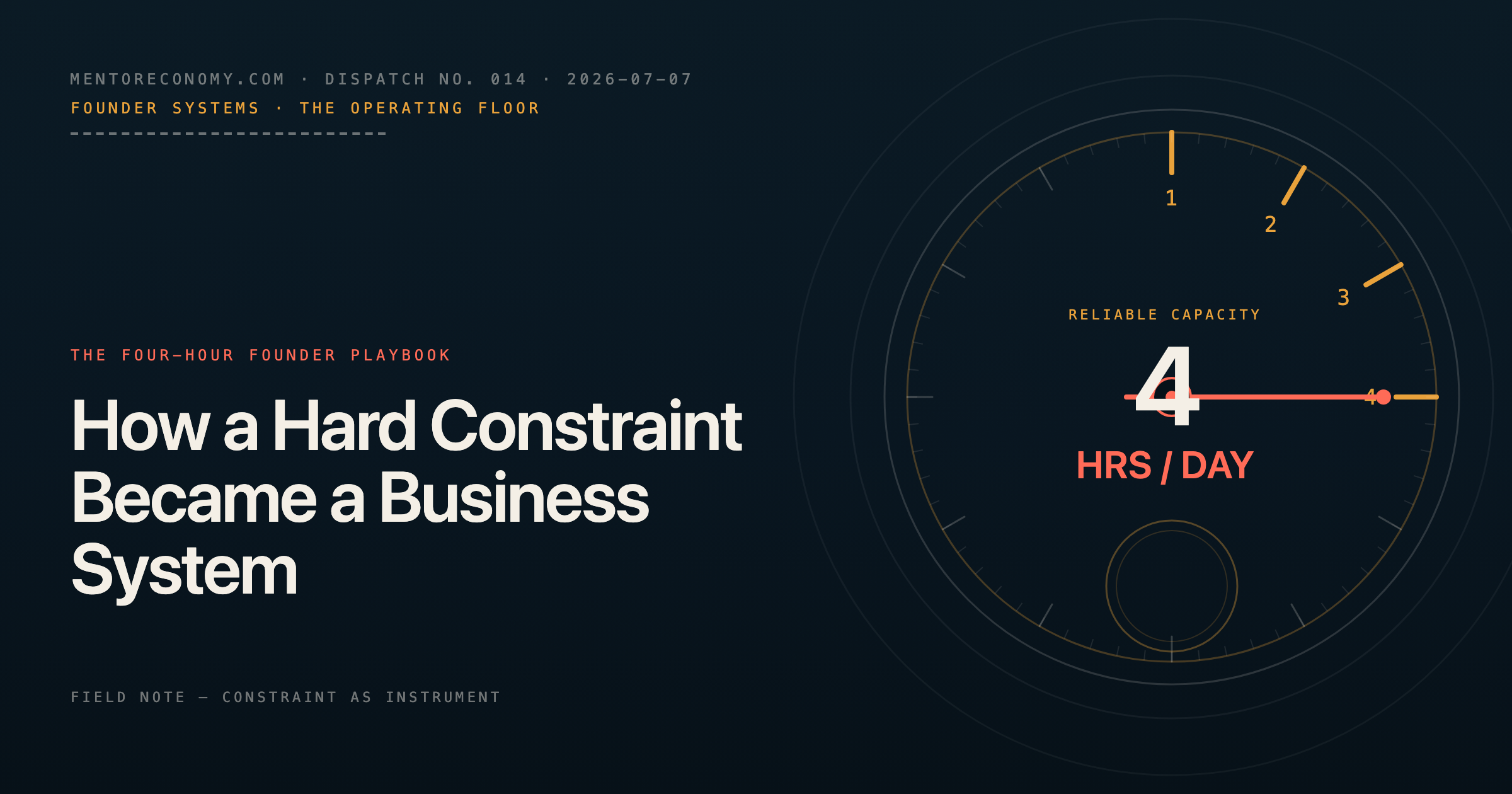
I didn't design a four-hour workday because it sounded efficient. My body designed it for me. Here is the actual system that came out of it — and the evidence that the mechanism isn't unique to me.
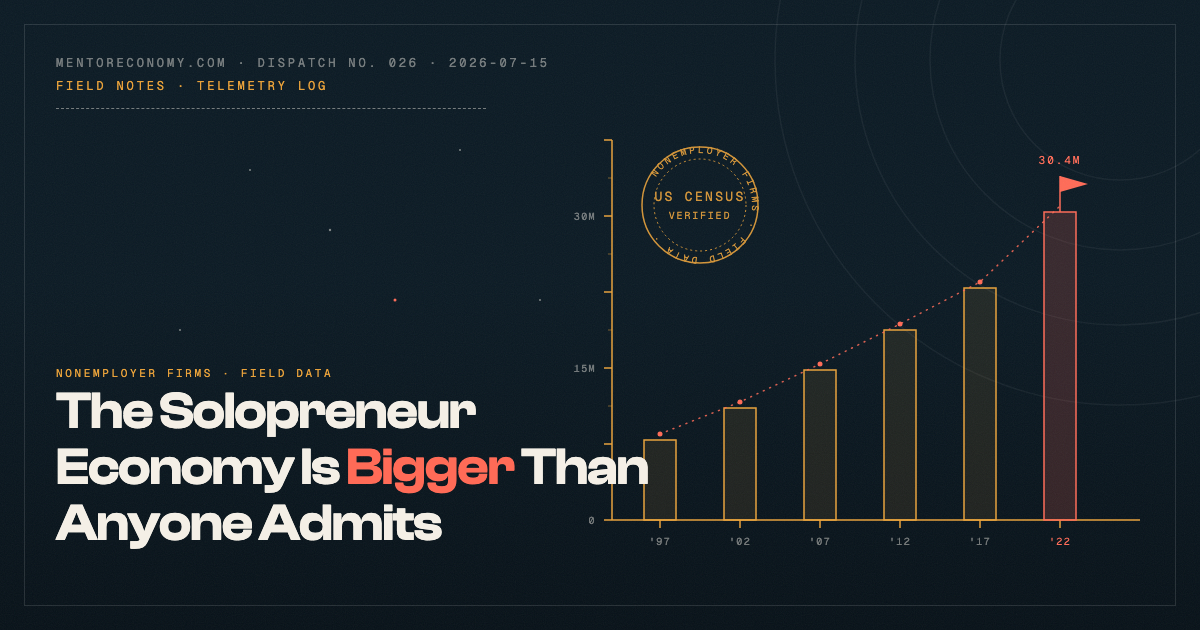
The one-person business economy is both larger and poorer than either its promoters or its skeptics claim. I pulled the primary numbers — Census receipts classes, MBO Partners, Upwork — and logged what they actually show, including the parts that don't flatter the pitch.
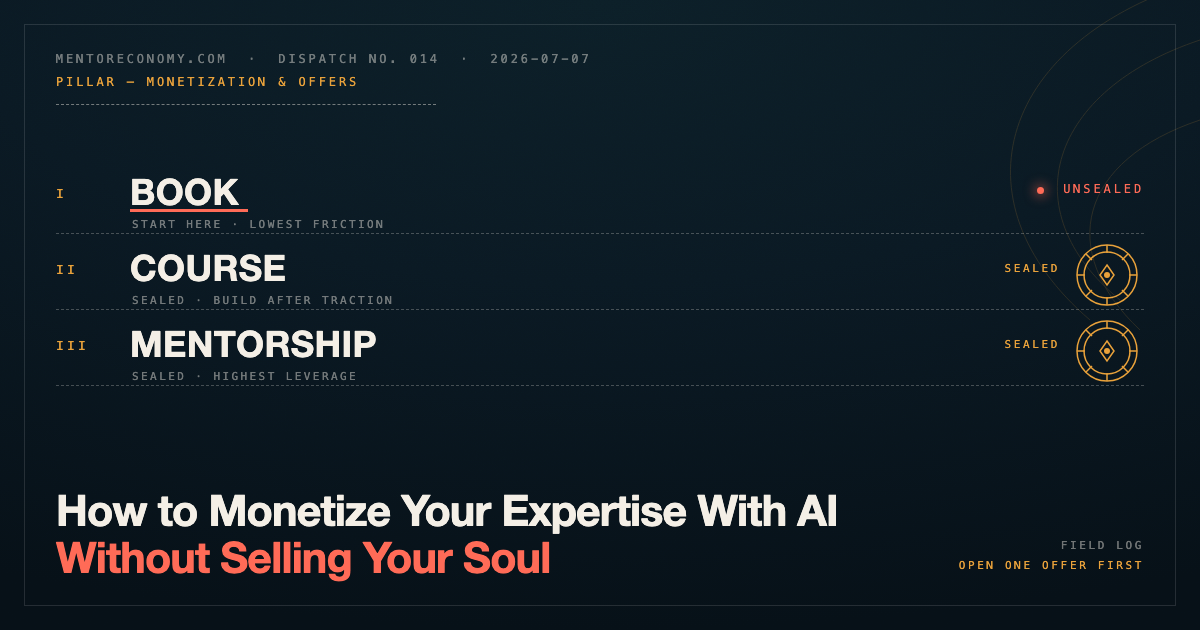
You don't need a new skill. You need a way to package the one you already have — and a system that delivers it without eating every hour of your day, or your integrity.
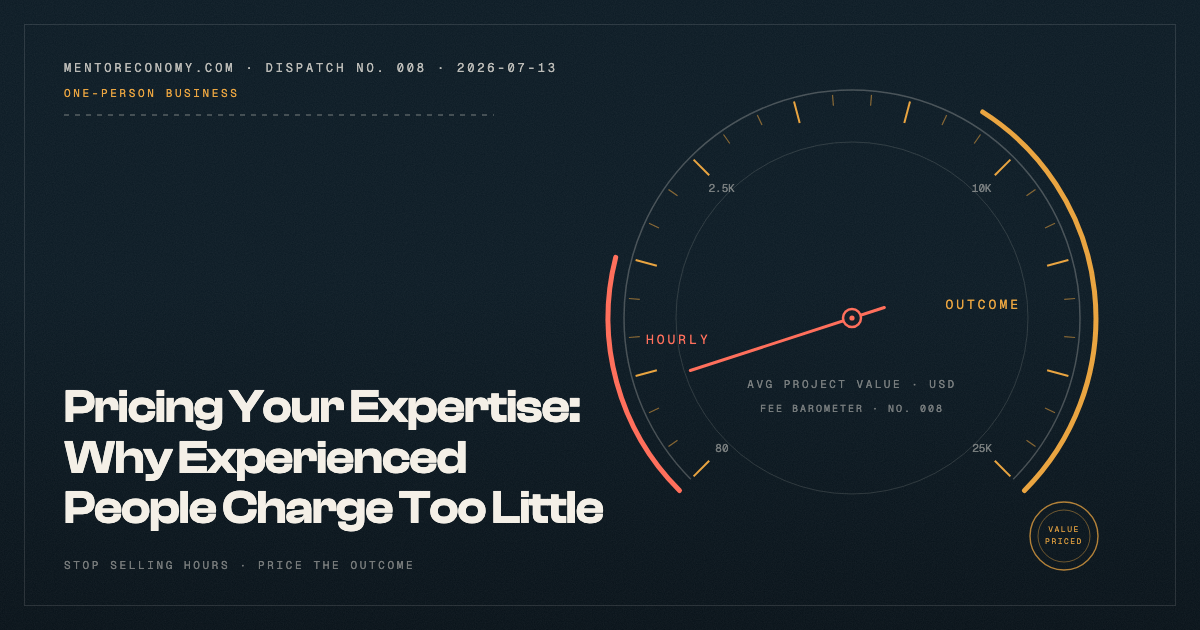
The most common failure point for experts going independent is not marketing or skill. It's a number — and most veterans pick it by dividing their old salary by 2,000.
The fear is that AI makes mentors obsolete. The trial data — including the honest wins for AI coaching apps — points somewhere narrower and, if you're a mentor, considerably better.
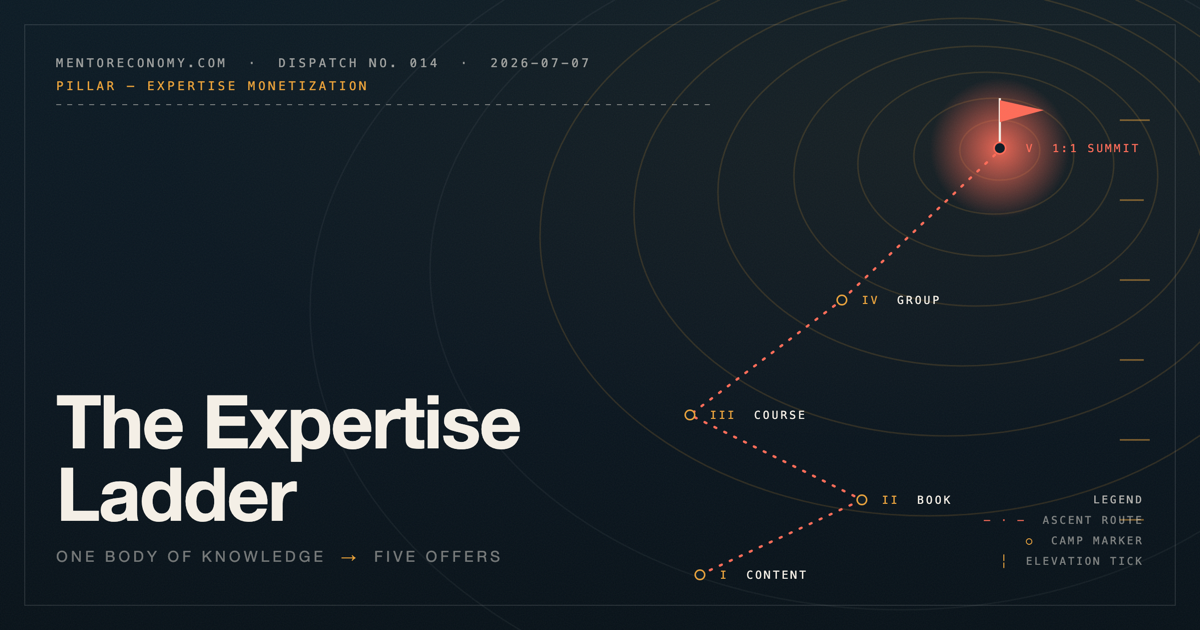
Most experts build the $10,000 offer first and wait for strangers to buy it. The research on customer economics says that is exactly backwards — and the fix is a ladder, not a funnel diagram.
Not a chatbot gimmick. Not a replacement for you. A way to put your judgment to work on the hours you don't have — if you do the codification first.
The people who need your expertise are asking a chatbot, not a search bar. Here is what the measured evidence — not folklore — says about becoming the source the answer cites.
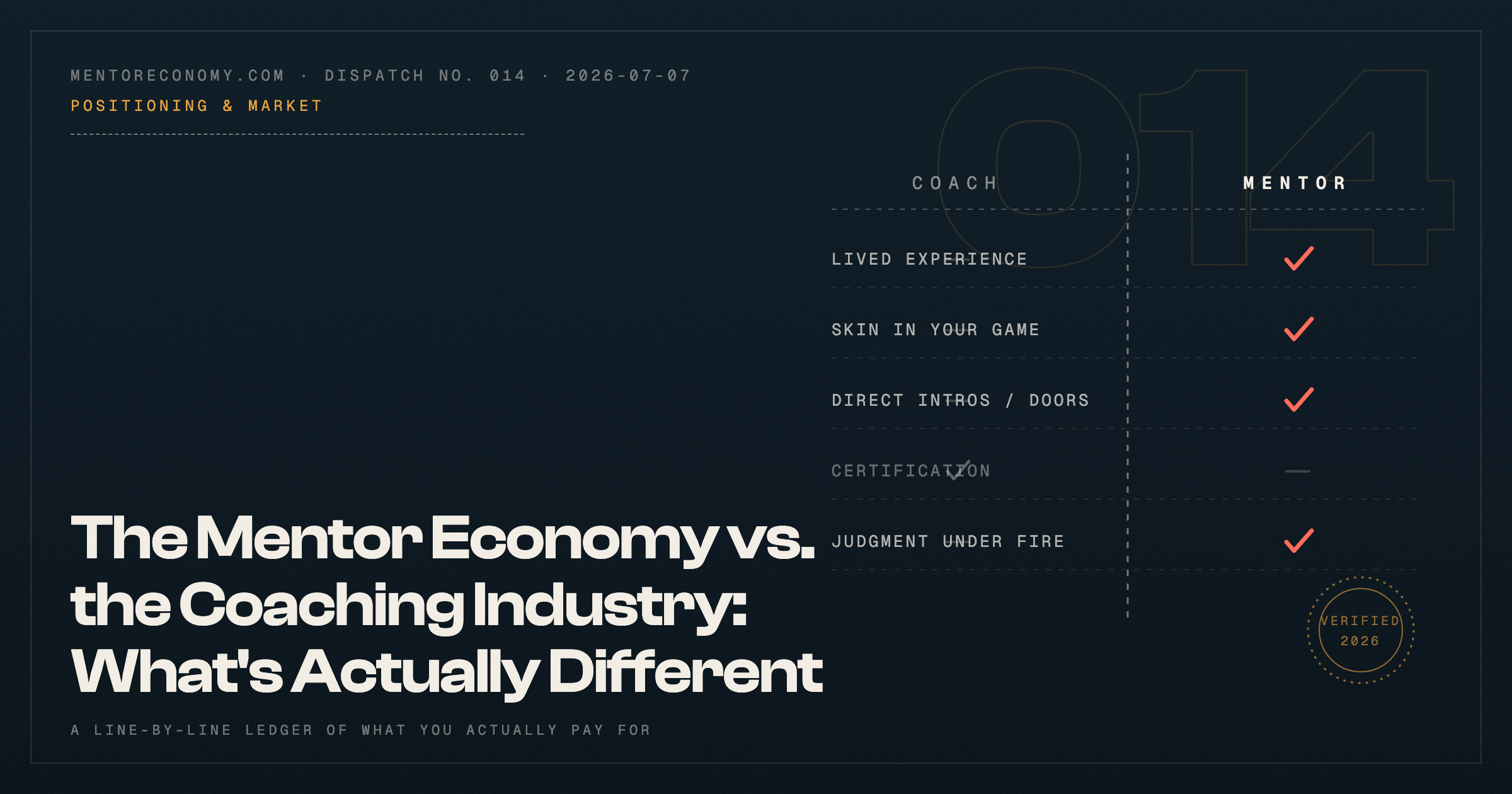
The coaching industry hit a record 122,974 practitioners and $5.34B in revenue — while average per-coach income fell. That's not a scandal. It's a structural signal, and it's the clearest way to see what the mentor economy actually is.
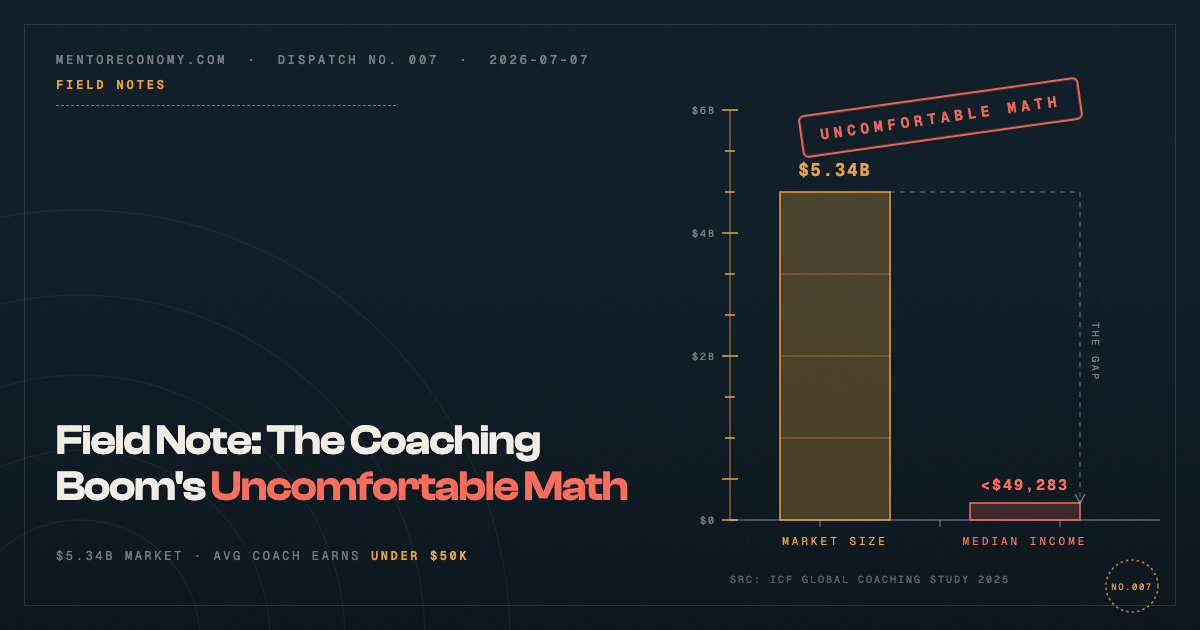
The coaching market is growing at 15% and the average practitioner still earns under $50k. Both facts come from the same ICF report. This dispatch publishes the numbers the industry glosses over — and names the structural reason for the gap.
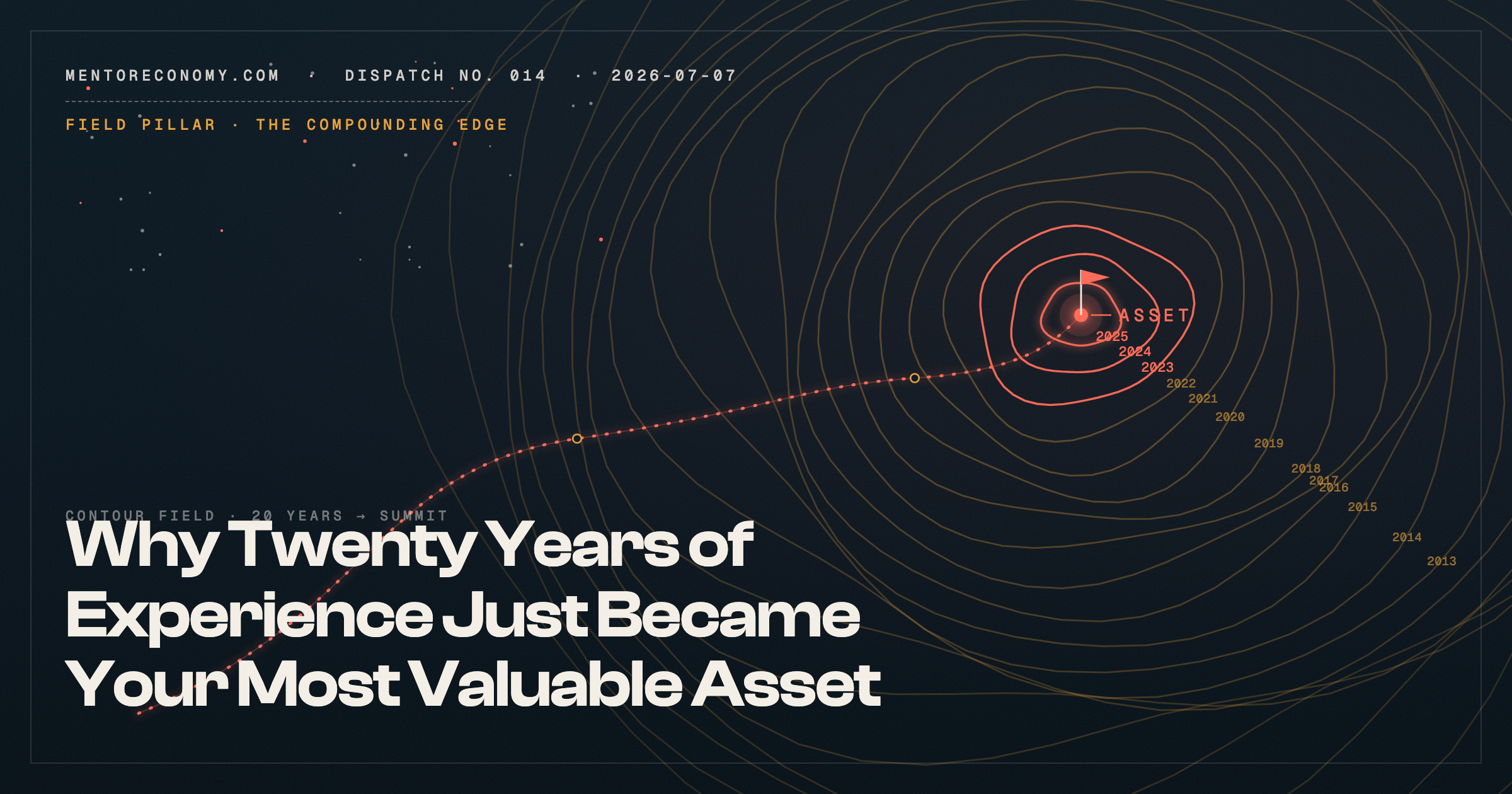
Everyone is worried AI is making experience worthless. The employment data from millions of workers says the opposite is happening — and the people who understand why are the ones building something now.
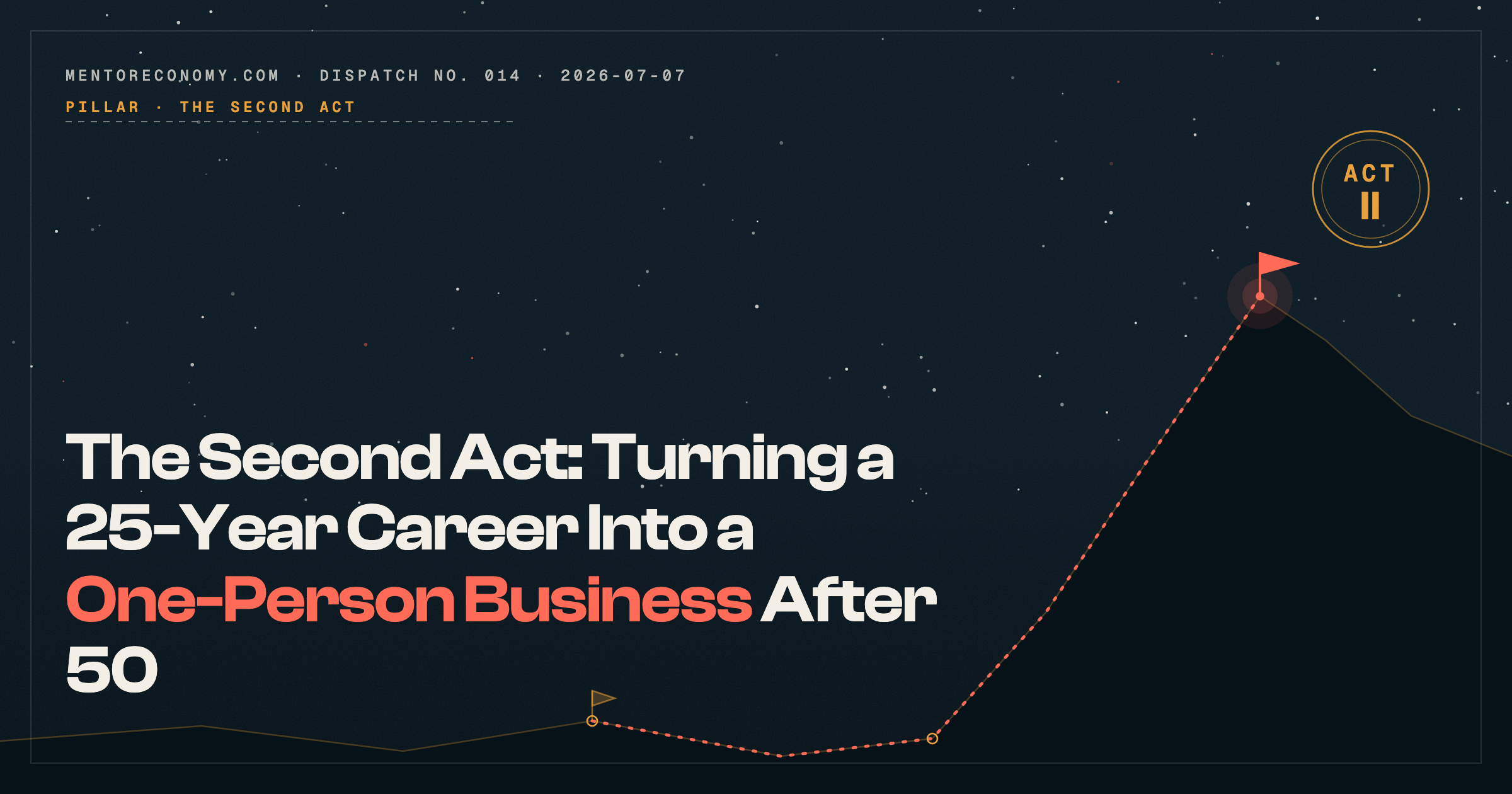
The job market tells people over 50 they are depreciating. The founder data says they are peaking. I pulled the studies — Census, AARP, ProPublica, Pew, SBA — and logged what they actually show, then sketched the first 90 days of the second act.
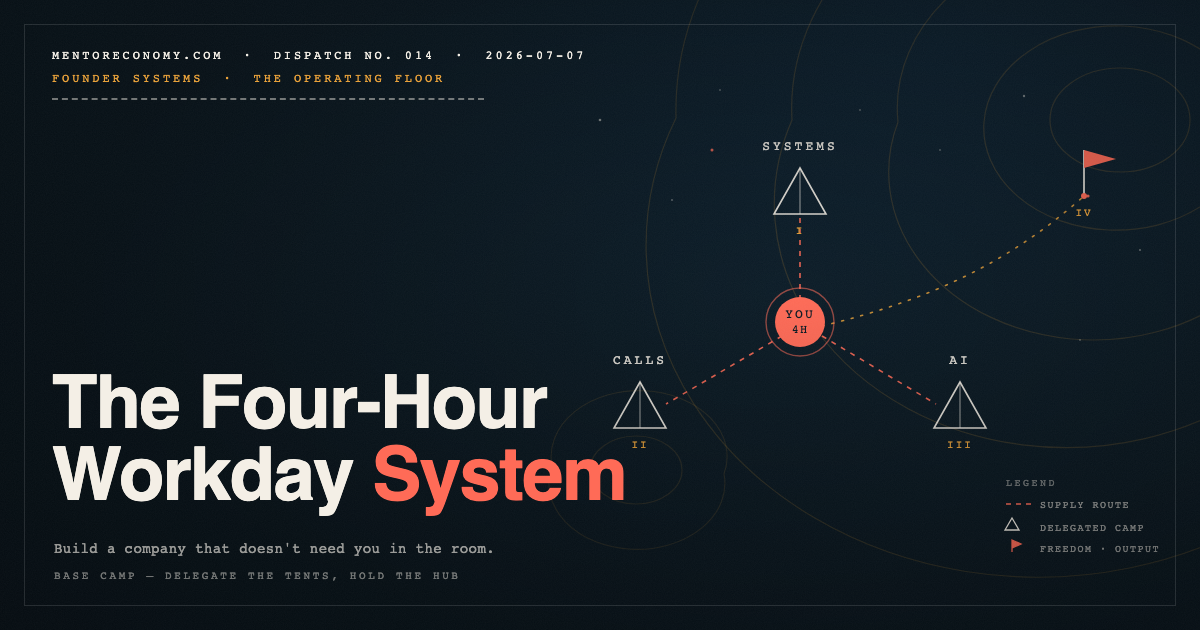
The four-hour workday isn't about doing less. It's about building a business that runs on systems instead of on you — and the time-use research says the hours you'd be cutting were mostly never productive in the first place.
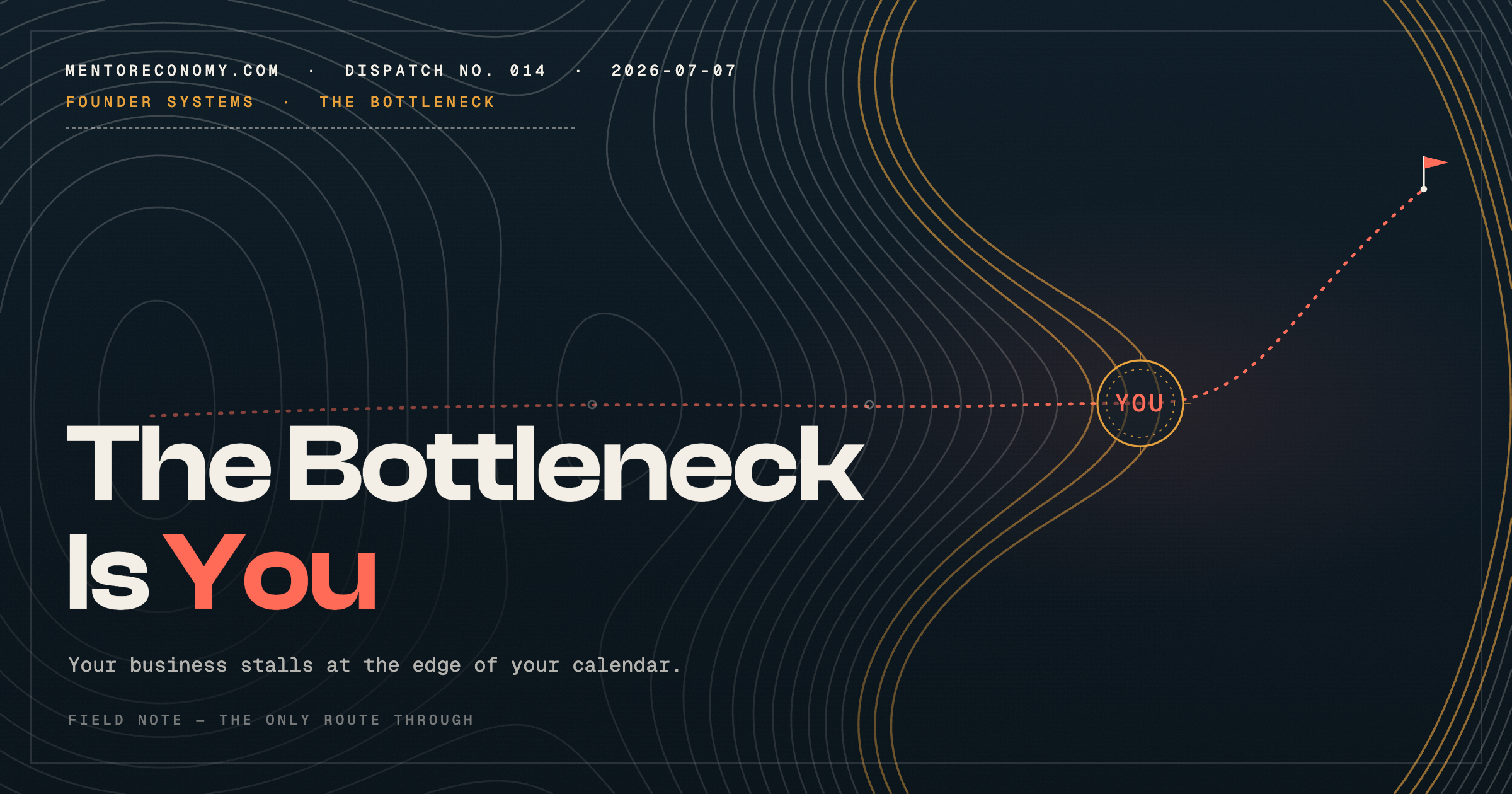
Your business is not stalling because demand ran out. It is stalling because you ran out. Here is the case — with the delegation research — that the founder is the constraint, and the ladder that moves you out of the delivery path.
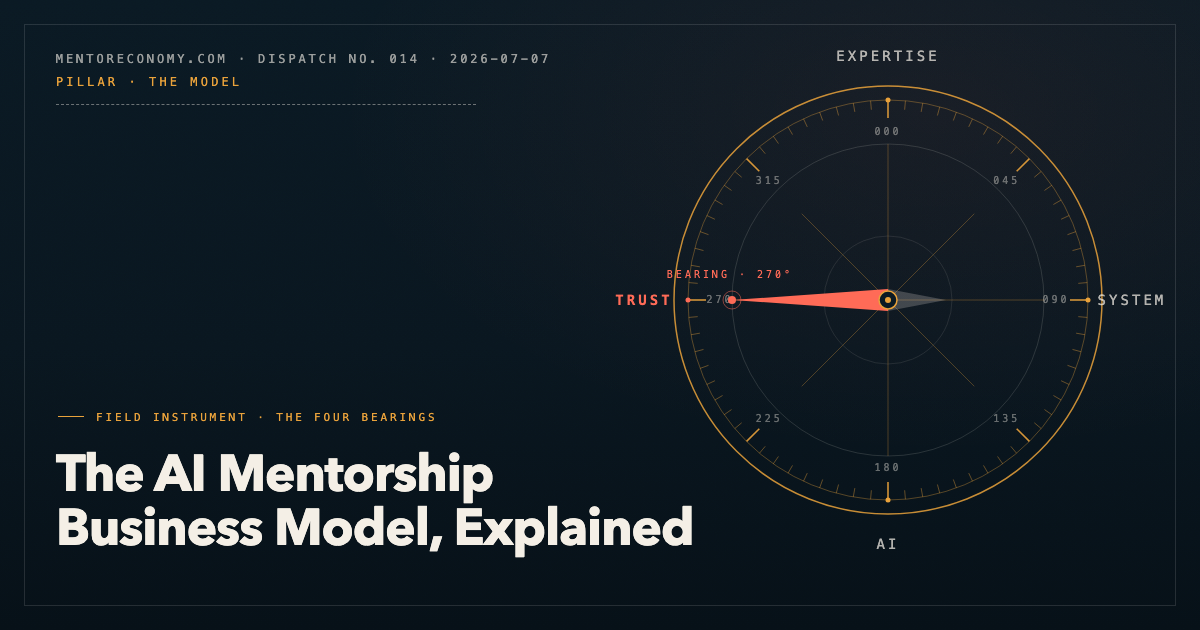
One expert. A codified system. An AI delivery layer underneath it. Here are the five components of the model, the measured economics behind the leverage, and the two places the whole thing breaks.
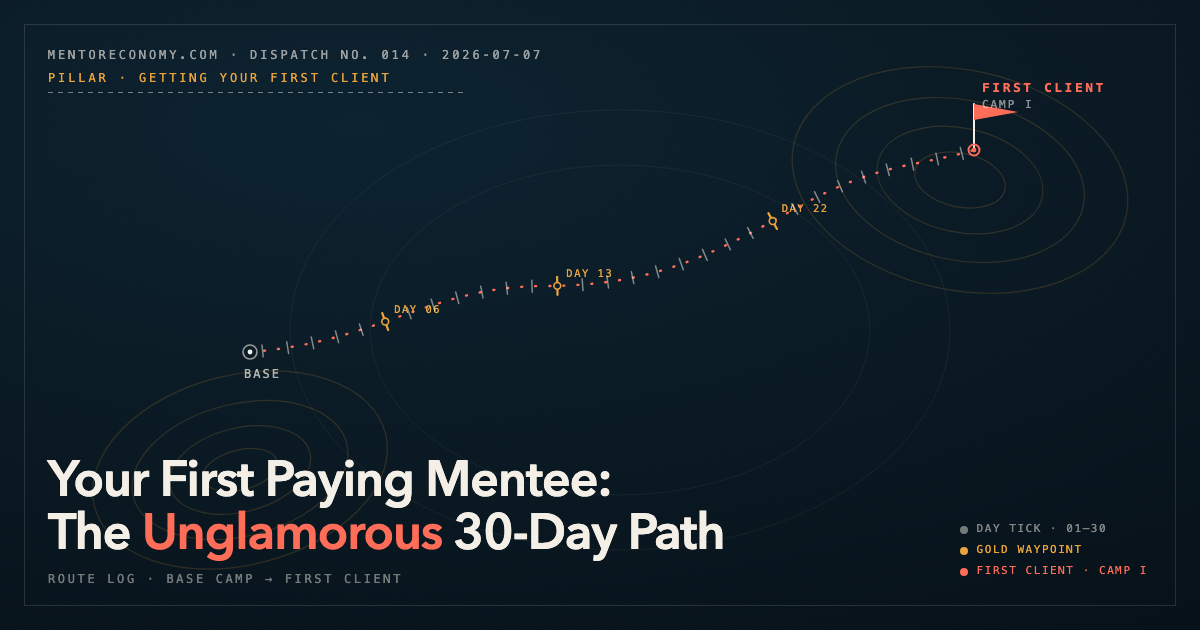
Everyone selling you the dream says 'post daily and clients will come.' The data says your first client is already in your phone — and the path to them is direct, honest, and slightly uncomfortable.
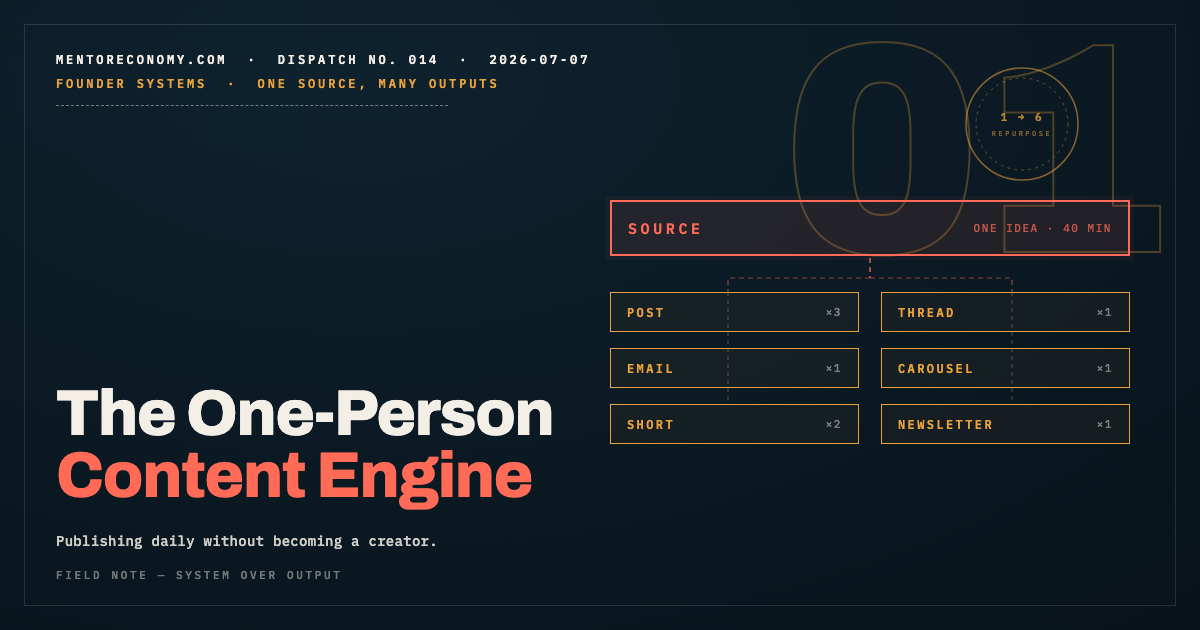
You don't need to become a creator. You need a system that mines what you already know — the calls, the docs, the book you keep not writing — and ships it on a cadence you can actually hold. Here's the AI content system for experts, with the quality gates that keep it honest.
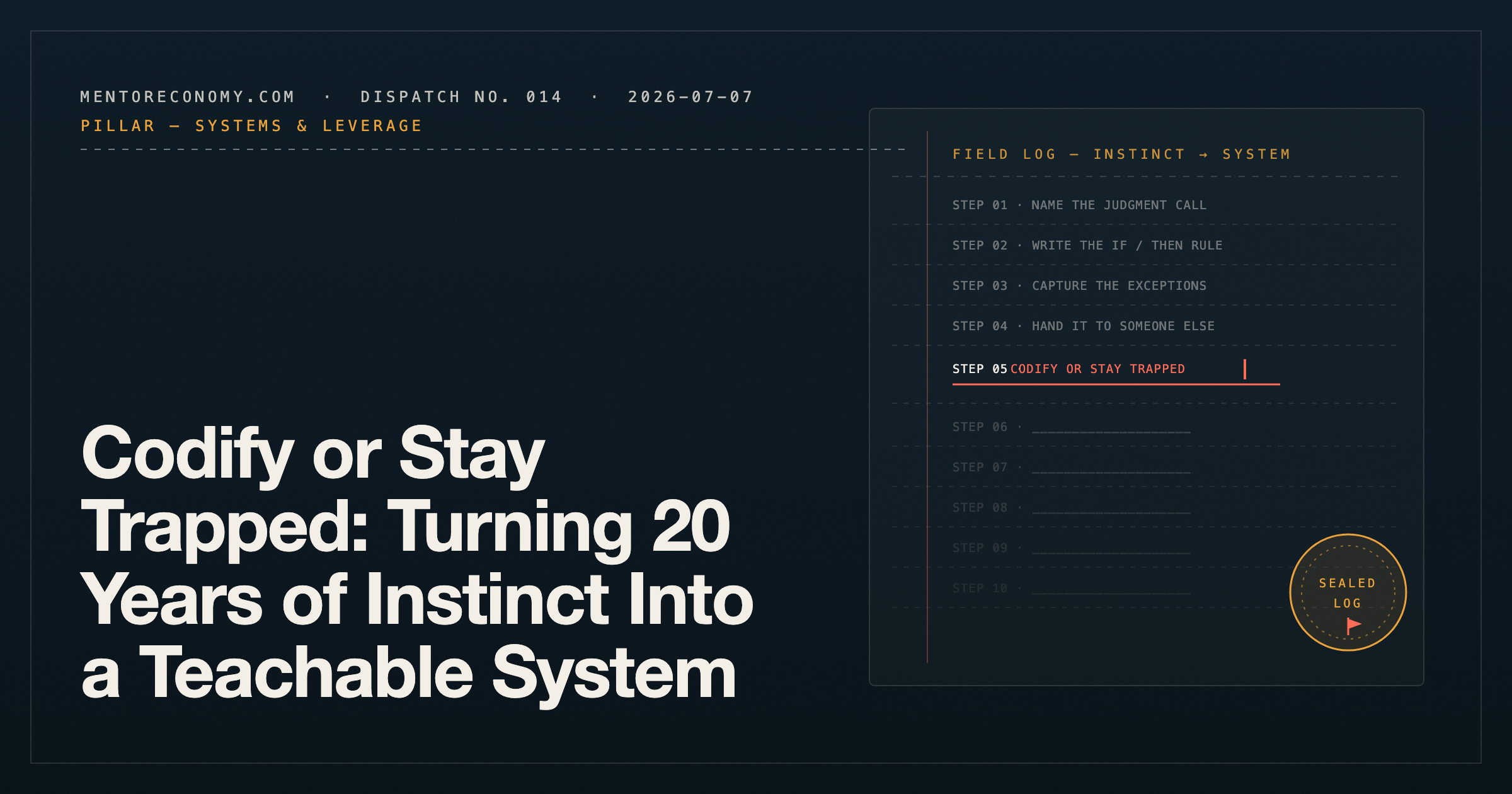
Everything you want AI to do for you — the clone, the course, the content engine — depends on one unglamorous prerequisite: getting the expertise out of your head and onto the page. Here is why that is harder than it sounds, and the method that actually works.
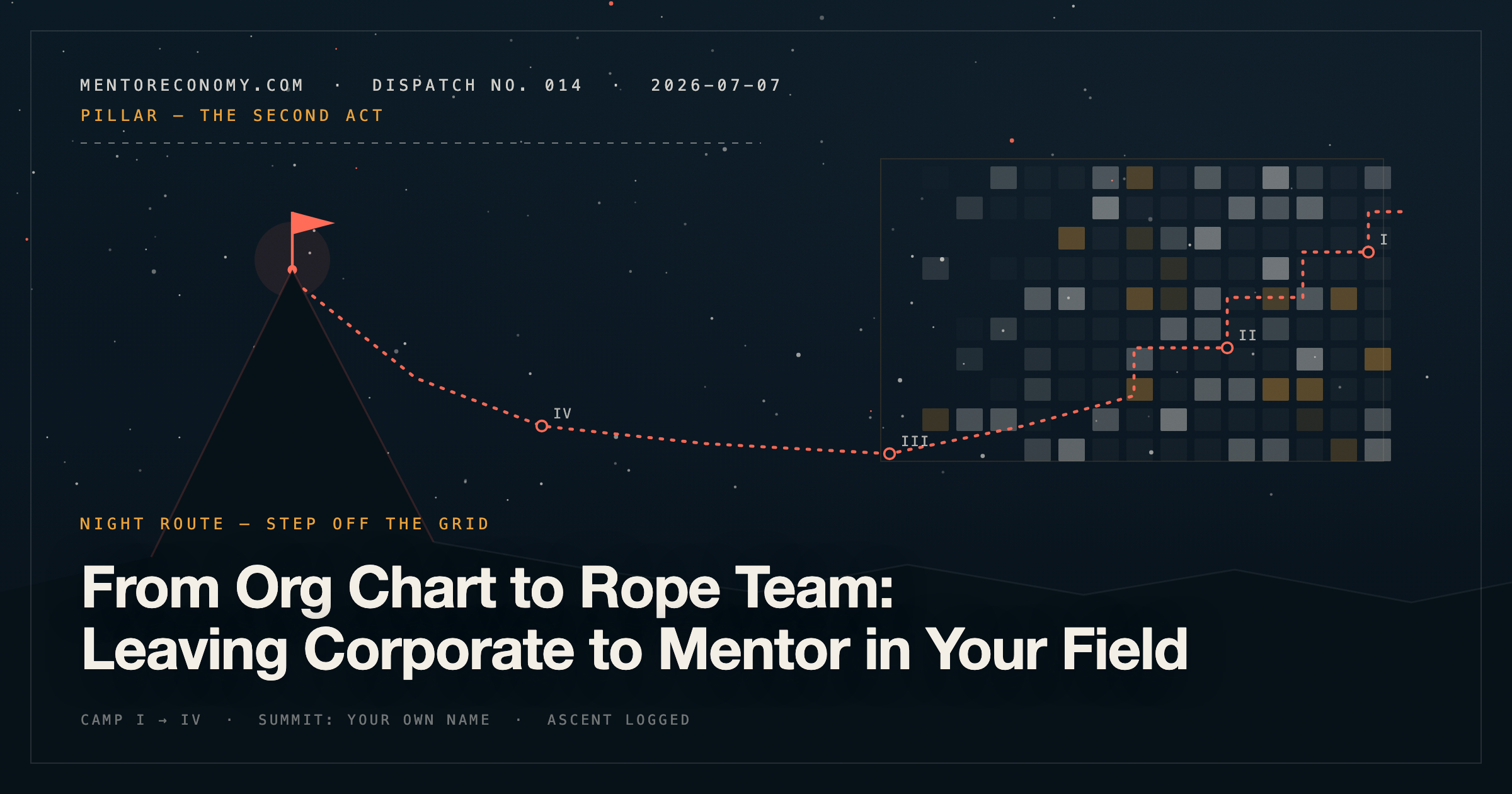
Not a leap-and-the-net-appears pitch. The data says the people who make it out of corporate build the ladder while still employed — and plan explicitly for the scariest month, the one right after the title disappears.
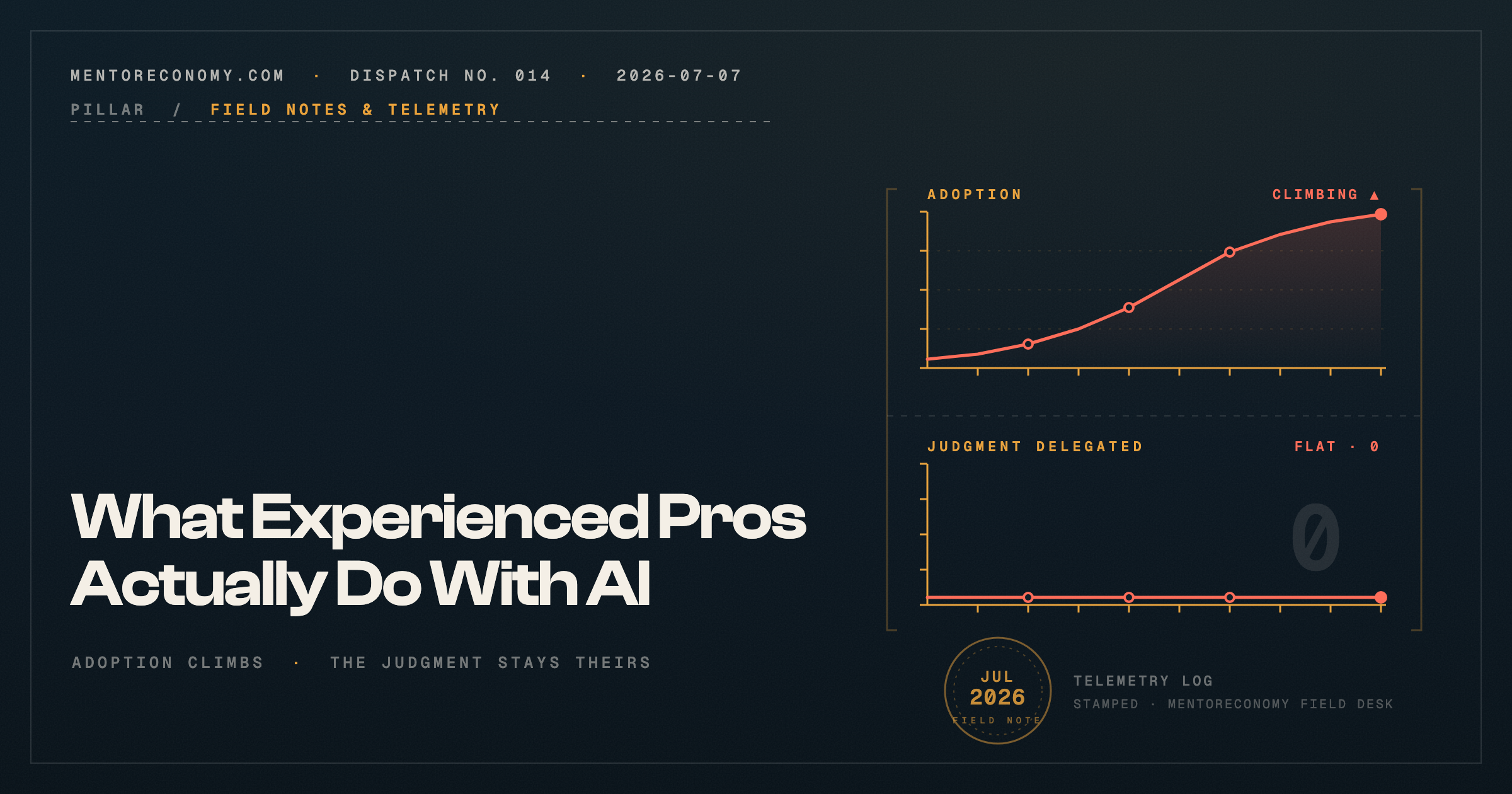
A timestamped log of where AI adoption among senior professionals actually stands — what's delegated, what's still human-only, where clients draw the line, and how fast the gap between fluent and avoidant experts is compounding. Every number sourced and dated.
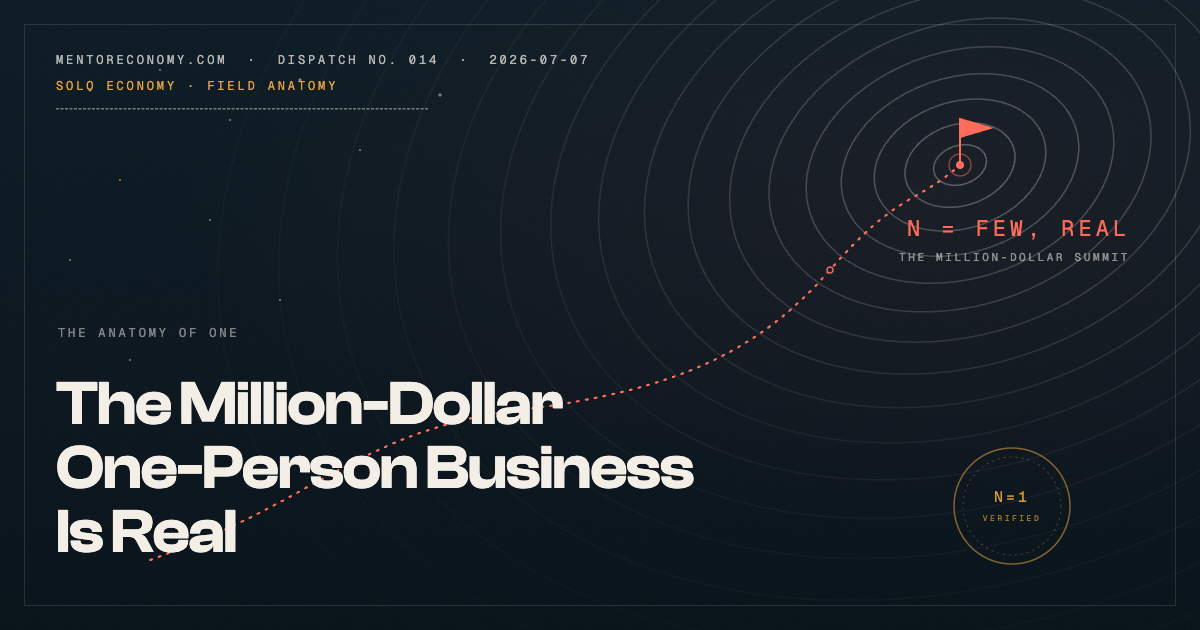
The seven-figure solo business stopped being a keynote anecdote and became a Census category. I pulled the counts, the industry clusters, and the revenue-per-person benchmarks to map the structure these businesses share — and to log the base rate the promoters skip.
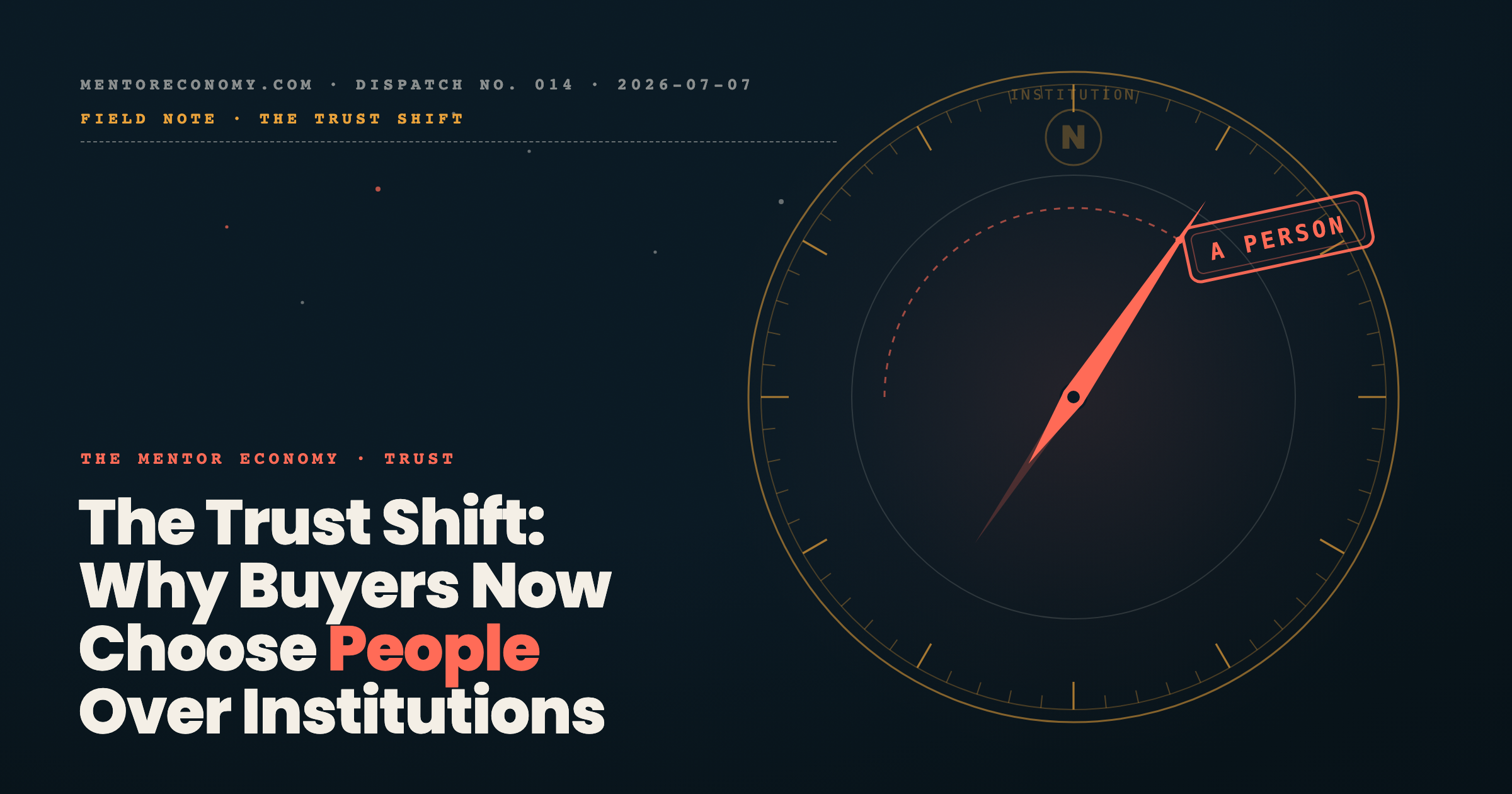
Every dataset I can find points the same direction: trust is migrating from institutions to identifiable individuals. That migration is the demand engine of the mentor economy — and it comes with a cost nobody selling the trend wants to mention.
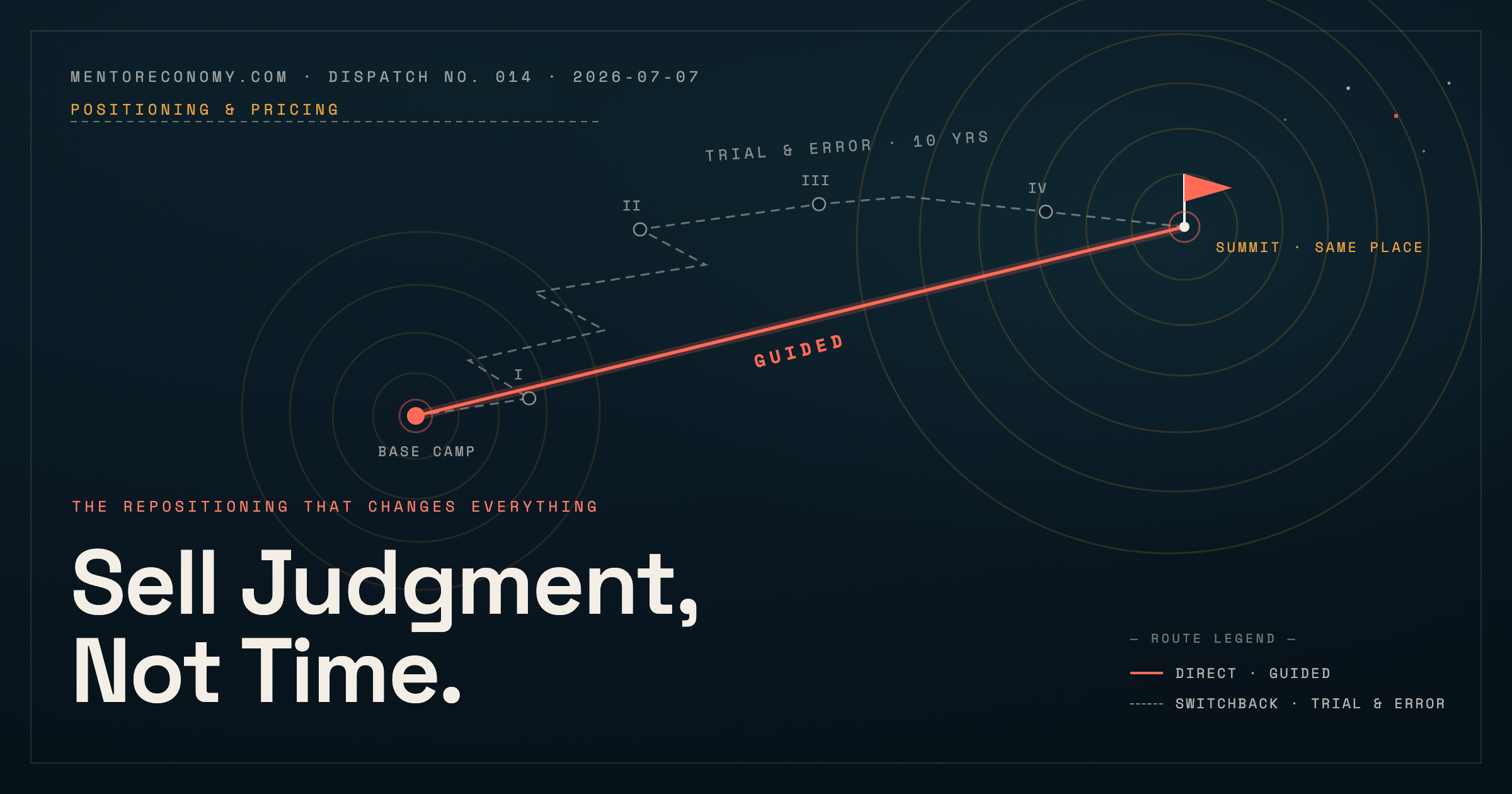
Every capped expert I meet is selling the same wrong product: hours of their presence. The clients were never buying that. They were buying the years of error your judgment lets them skip.
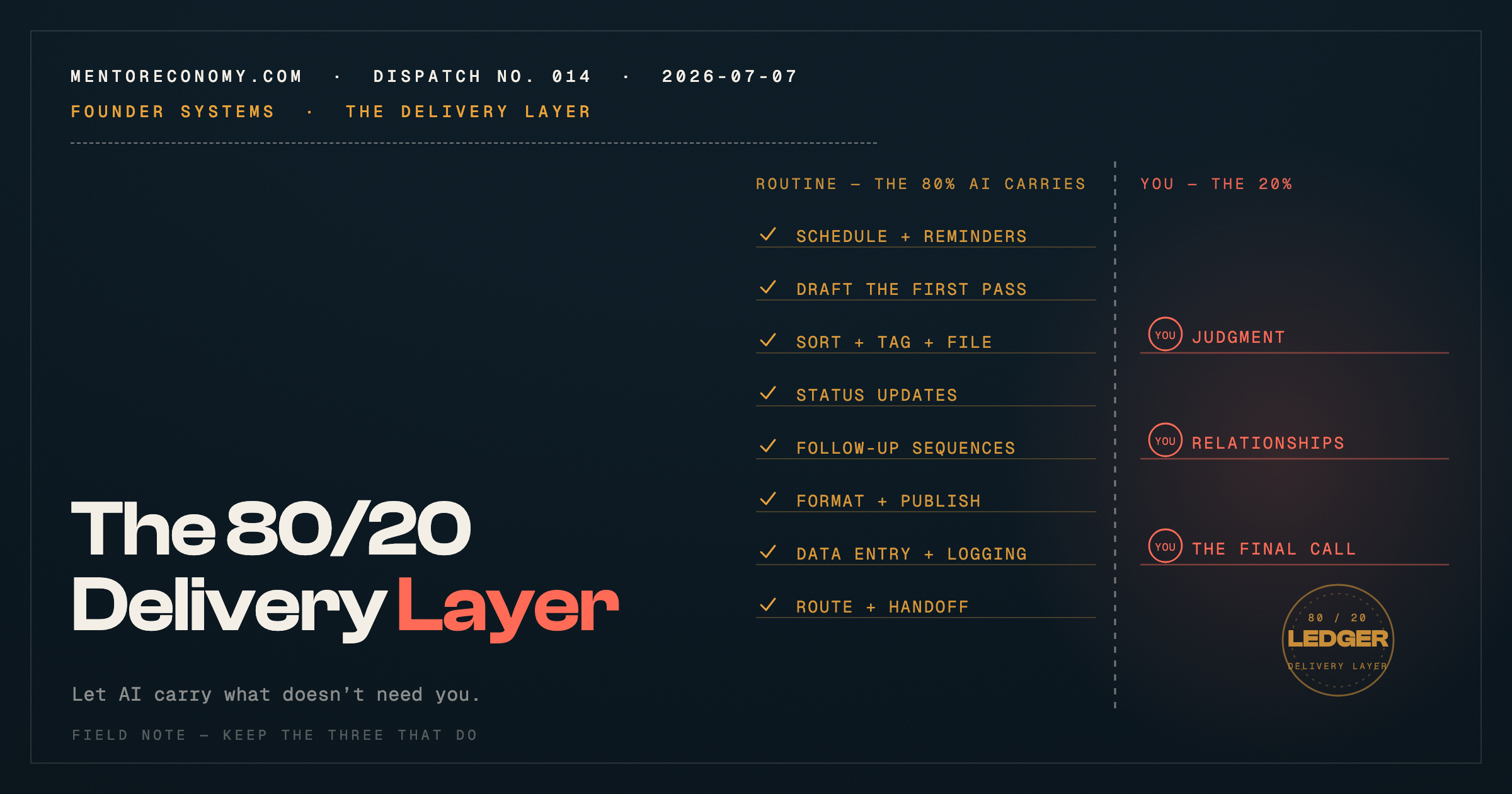
Most of what a mentorship business delivers each week does not require the mentor. The evidence says AI can carry that share at human-level satisfaction — and it also says exactly where handing over too much destroys the thing clients are paying for.
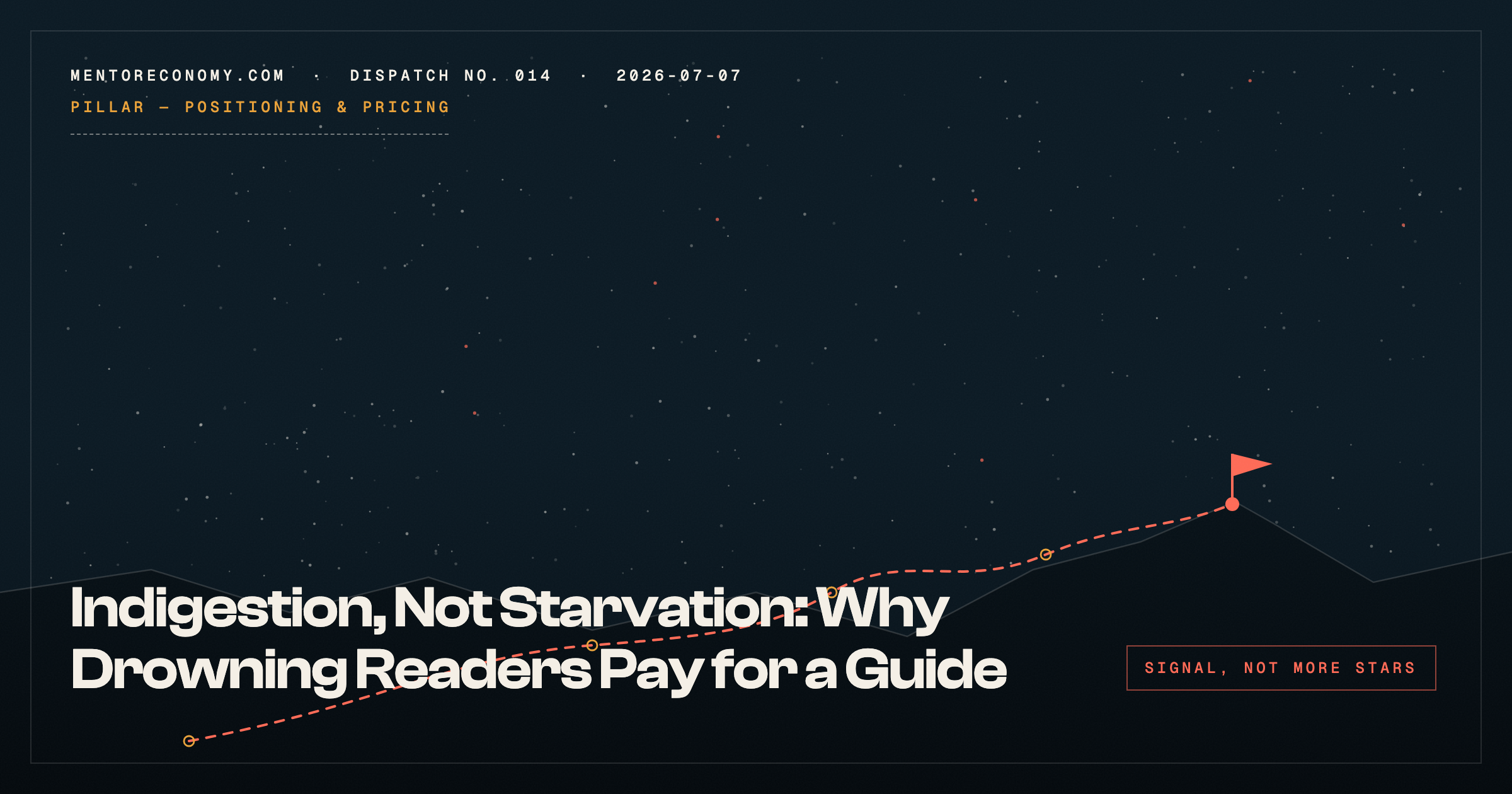
Nobody is starving for information anymore. The world produced 147 zettabytes of it last year. What learners have is indigestion — and the evidence says the cure is not more content but a guide who sells sequence, filter, and accountability.
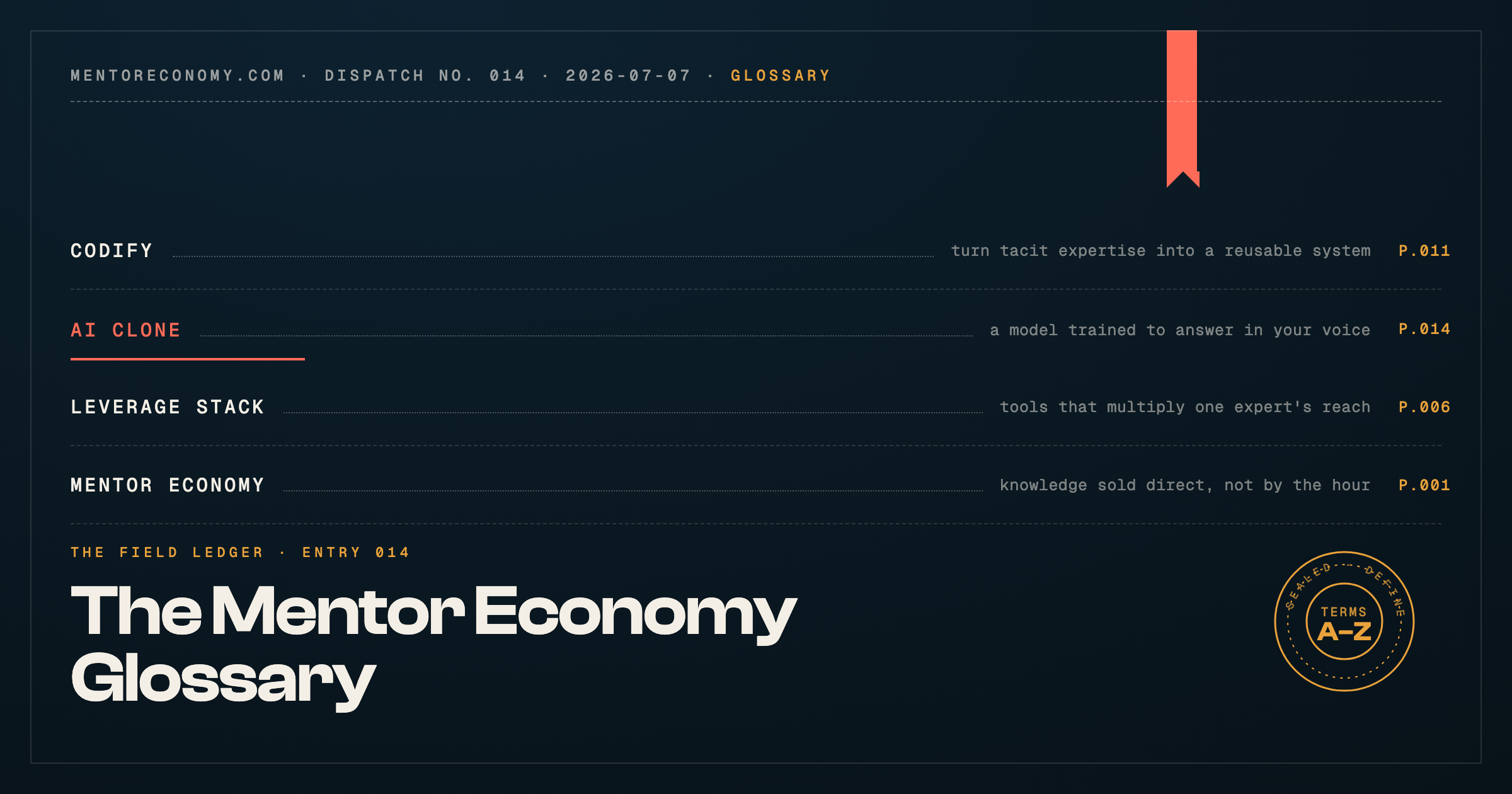
A new economy gets named before it gets measured. This is the naming: every term the rest of this ledger uses, defined plainly, with the book chapter each definition comes from.
The Mentor Economy is the full system — the book is free, you just cover $9.95 shipping.
Get Your Free Copy